Snow Leopard GPS Collar: Bhutan Tracks a Third Cat in Thimphu
By Best of Bhutan Research Desk · October 25, 2026 · 7 min read
Bhutan has fitted a GPS collar on a snow leopard for only the third time. A team from the Department of Forests and Park Services (DoFPS) collared the cat during fieldwork in September 2026, BBS reported on 23 October. Kuensel reported a day later that the animal is a female, collared at Nubri in Thimphu dzongkhag at more than 3,000 metres.
The collar is part of a snow leopard tracking study run by DoFPS with WWF Bhutan. It is the third collar fitted since the first phase of the project began in 2016, and officials plan to collar two more cats in the 2026–27 financial year, according to BBS.
This post covers what was announced, why the GPS data matters, how many snow leopards Bhutan has, and what the news means if you are planning a trek in the high north.
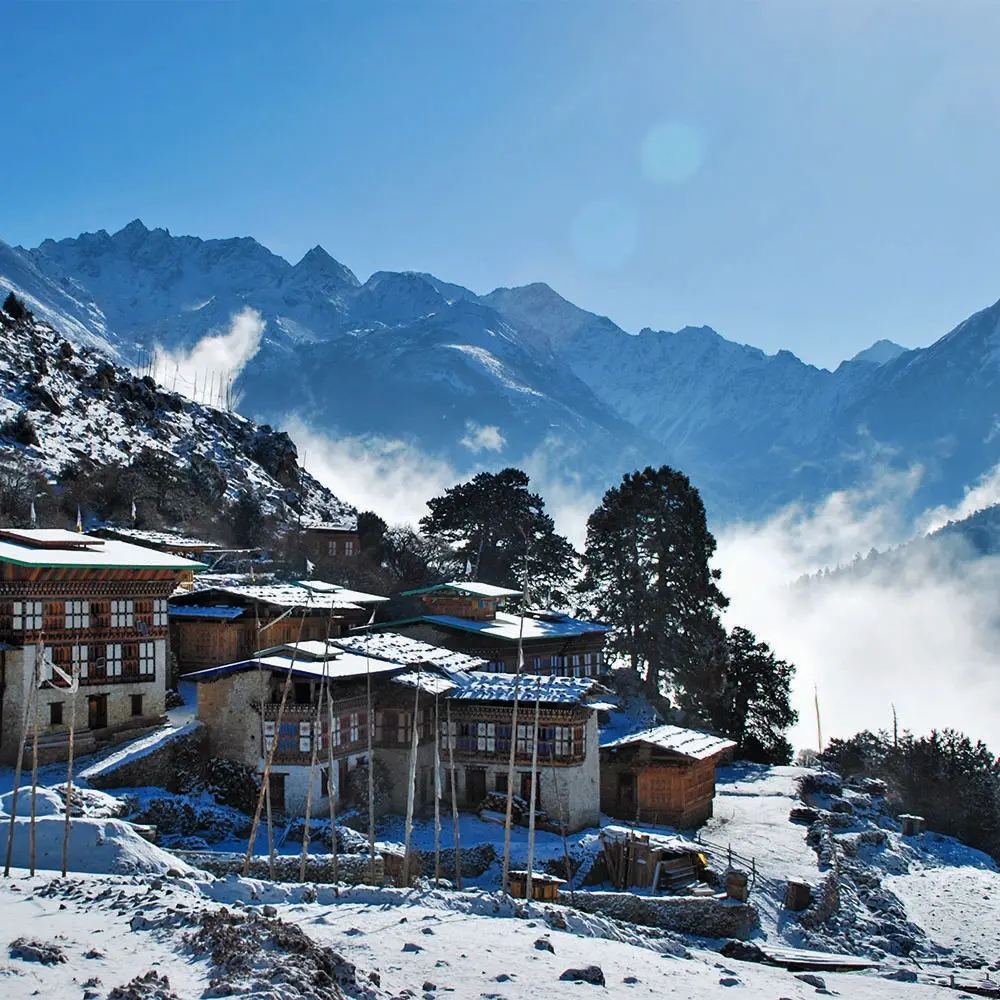
Representative alpine landscape in Bhutan. This is not a photograph of the collared snow leopard or the collaring site.
Key Facts at a Glance
| Detail | What has been reported |
|---|---|
| What happened | A snow leopard was fitted with a GPS collar |
| When | September 2026 fieldwork; announced 23–24 October 2026 |
| Where | Nubri, Thimphu dzongkhag, above 3,000 m (Kuensel) |
| Animal | Female (Kuensel) |
| Who | Department of Forests and Park Services, with WWF Bhutan |
| Collars so far | Three since the project began in 2016 (BBS) |
| Next step | Two more collars planned in the 2026–27 financial year |
| Target sample | At least five collared cats for reliable data |
| Bhutan population | 134 snow leopards (National Snow Leopard Survey 2022–2023) |
| Global status | Vulnerable on the IUCN Red List; fewer than 8,000 in the wild (BBS) |
Neither report named the protected area, the collar model or the animal's age and weight. We will update this post if DoFPS publishes more detail.
Why a GPS Collar on a Snow Leopard Matters
Bhutan counts its snow leopards with camera traps. Cameras show where a cat was at one moment. A GPS collar records where a single animal goes, day and night, for months.
According to BBS, the snow leopard GPS collar data will be used to study:
- Movement and home range — how large an area one cat uses
- Habitat use — which slopes, valleys and altitudes it prefers
- Dispersal routes — how young animals move between areas
- Contact with livestock — where cats and herds overlap, which is the basis for reducing conflict with herders
- Climate effects — how warming may change the links between patches of alpine habitat
The gap is real. Tandin, Programme Specialist for Forest and Biodiversity at WWF Bhutan, told BBS that "Bhutan has not conducted a comprehensive study on snow leopards' movement ecology."
Why five collars
Lungten Dorji (PhD), Senior Forestry Officer at the DoFPS Nature Conservation Division, told BBS that at least five collared cats are needed for accurate results on home range, resource selection and alpine habitat use. One or two animals can behave in ways that are not typical of the population. With three now collared and two more planned, the project would reach that minimum if the 2026–27 fieldwork succeeds.
How Many Snow Leopards Does Bhutan Have?
The latest count comes from the National Snow Leopard Survey 2022–2023, released in September 2023. Key results, from the WWF announcement and The Bhutanese:
| Survey figure | Result |
|---|---|
| Snow leopards confirmed | 134 |
| First national survey (2016) | 96 |
| Change | Up 39.5% |
| Habitat surveyed | More than 9,000 km² of northern alpine habitat |
| Camera trap stations | 310 |
| Average density | 1.34 snow leopards per 100 km² |
| Highest density | Western Bhutan |
The survey covered five protected areas — Jigme Khesar Strict Nature Reserve, Jigme Dorji National Park, Wangchuck Centennial National Park, Bumdeling Wildlife Sanctuary and Jigme Singye Wangchuck National Park — plus the Paro and Thimphu forest divisions. It recorded snow leopards for the first time in Bumdeling and in lower-elevation parts of the Thimphu forest division, according to WWF.
That last point gives some context for this year's collar. The Thimphu forest division is one of the areas where the 2022–2023 survey added new records, and the newly collared female was caught in Thimphu dzongkhag. Neither BBS nor Kuensel said whether the two are linked, so treat that as background, not a stated reason for the site.
Legal protection
In Bhutan the snow leopard is a Schedule I species under the Forest and Nature Conservation Act 2023, and illegal acts against it are treated as fourth-degree felonies, The Bhutanese reported. Globally it is listed as Vulnerable on the IUCN Red List and ranges across 12 countries in Central and South Asia, according to BBS.
What It Means for Travellers
For most visitors, the collar changes nothing on the ground. It does tell you where Bhutan's snow leopards live and how the country manages them.
Snow leopards live on Bhutan's high trekking routes. The protected areas in the national survey include Jigme Dorji National Park, which the Jomolhari, Laya and Snowman treks cross. These are the routes where you are in snow leopard habitat. The Snowman route is also in the news this week: the Snowman Race from Laya to Bumthang began on 24 October, Kuensel reported.
Do not plan a trip around seeing one. Snow leopards are rare and hard to spot even for rangers who work in their habitat; Bhutan's count relies on camera traps for that reason. Tour operators cannot promise a sighting. On a high trek you are more likely to see blue sheep, yaks and signs such as tracks or scrapes. Treat any sighting as luck.
Follow your guide's rules near wildlife. Keep your distance from any animal, stay on the trail, do not feed or bait wildlife, and do not fly drones without permission. If you see a snow leopard, tell your guide; sightings can be useful to park staff.
Trek costs and rules are unchanged. Treks in Bhutan are run through licensed tour operators with a licensed guide, and the Sustainable Development Fee applies for every night in the country. Our complete trekking guide covers seasons, permits and difficulty.
The best months for high treks are generally spring and autumn. Most high passes on the Laya and Snowman routes are snowbound in winter.
Related Planning Links
- Bhutan's treks — routes, altitudes and difficulty
- Bhutan complete trekking guide — seasons, permits and what to pack
- Bhutan as a biodiversity hotspot — the wider picture of species and protected areas
- Asiatic black bear in Bhutan — another large mammal and how to trek safely around it
- Himalayan musk deer in Tsirang — a recent camera-trap record
- Royal Highland Festival in Laya — the highland festival held on the Laya trekking route
Frequently Asked Questions
How many snow leopards are there in Bhutan?
The National Snow Leopard Survey 2022–2023 confirmed 134 snow leopards, up 39.5% from 96 in the first national survey in 2016. Density was higher in western Bhutan than in the centre and east.
How many snow leopards have been GPS collared in Bhutan?
Three. The female collared in Thimphu dzongkhag in September 2026 is the third since the project began in 2016. Officials plan two more in the 2026–27 financial year, which would reach the minimum of five they say is needed for reliable data.
Why put a GPS collar on a snow leopard?
To learn how far individual cats travel, which habitat they use, how young animals disperse, and where they overlap with livestock. That information supports measures to reduce conflict with herders and shows how climate change may affect alpine habitat.
Can tourists see snow leopards in Bhutan?
It is possible but rare, and no one can guarantee it. Snow leopards live in Bhutan's high alpine zone, including Jigme Dorji National Park, which the Jomolhari, Laya and Snowman treks pass through. Most trekkers see blue sheep and yaks rather than snow leopards.
Where do snow leopards live in Bhutan?
In the northern alpine belt. The 2022–2023 survey covered Jigme Khesar Strict Nature Reserve, Jigme Dorji National Park, Wangchuck Centennial National Park, Bumdeling Wildlife Sanctuary, Jigme Singye Wangchuck National Park and the Paro and Thimphu forest divisions.
Sources
- BBS — "Bhutan collars another snow leopard for conservation research," 23 October 2026. Collaring, project history, plans for two more collars, purpose of the study, population figures and quotes.
- Kuensel — "GPS collar fitted on a snow leopard in Nubri," 24 October 2026. Sex of the animal, location and altitude.
- WWF — National Snow Leopard Survey 2022–2023 results, September 2023.
- The Bhutanese — "Bhutan's Snow Leopard Population Soars," September 2023. Survey results and legal protection.
- Kuensel — "Snowman Race begins today," 24 October 2026.
Want a trek through Bhutan's high country planned around season, altitude and your fitness? Talk to us.