What Makes Bhutan Different From Nepal and Tibet? The Complete Comparison
By Best of Bhutan Research Desk · August 5, 2026 · 19 min read
Ask most travellers to place Bhutan, Nepal, and Tibet on a mental map and you get the same rough answer: three Himalayan places, all Buddhist, all mountainous, all somewhere behind the world's highest peaks. It is an understandable compression. It is also wrong in almost every particular that matters to someone deciding where to spend two weeks and a significant amount of money.
These three are not variations on a theme. They differ in political status, dominant religion, how you are permitted to enter, what a day costs, how many people you will share the trail with, and what happens to the culture you came to see. One is a sovereign Buddhist kingdom that has never been colonised. One is a federal republic that abolished its monarchy in 2008 and is majority Hindu. One is an autonomous region of China.
This guide sets out the differences properly. We are a Bhutanese tour operator, so you can reasonably expect us to prefer Bhutan — but you will find several places below where we say plainly that Nepal is the better choice, because for many travellers it is.
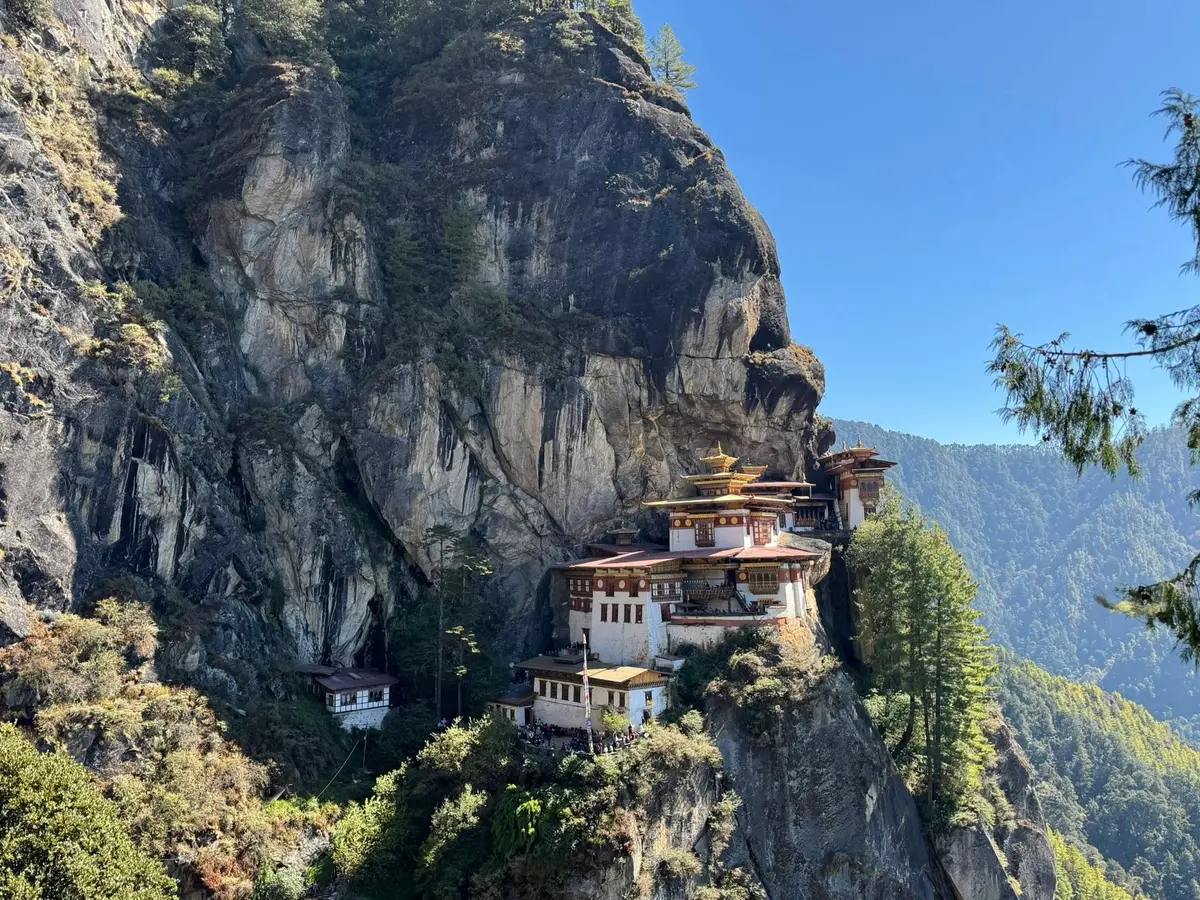
The Short Answer
- Bhutan is an independent Vajrayāna Buddhist kingdom that regulates tourism deliberately: a Sustainable Development Fee, a licensed guide, and roughly 209,000 visitors a year across the entire country. You come for intact living culture, empty trails, and a country that looks after itself.
- Nepal is a sovereign federal republic, Hindu-majority with a significant Buddhist minority, and the world capital of accessible mountaineering and teahouse trekking. Around 1.16 million visitors a year. You come for Everest, Annapurna, extraordinary value, and freedom of movement.
- Tibet is the Tibet Autonomous Region of the People's Republic of China. Entry requires a Chinese visa plus a Tibet Travel Permit, arranged through an authorised agency, with a licensed guide throughout. You come for the high plateau, Lhasa, and Tibetan Buddhist heritage under Chinese administration.
At a Glance
| Bhutan | Nepal | Tibet | |
|---|---|---|---|
| Political status | Sovereign kingdom | Sovereign federal republic | Autonomous region of China |
| Head of state | King (constitutional monarchy since 2008) | President (monarchy abolished 2008) | Chinese state administration |
| Ever colonised? | Never | Never formally | Incorporated into the PRC in the 20th century |
| Dominant religion | Vajrayāna Buddhism (state religion) | Hinduism (~81%), Buddhism (~9%) | Tibetan Buddhism |
| Annual visitors | ~209,000 (2025) | ~1,158,000 (2025) | Not separately published |
| Entry requirement | Visa + licensed operator + SDF | Visa on arrival | Chinese visa + Tibet Travel Permit |
| Independent travel | No — guide required | Yes | No — guide required |
| Daily cost (typical) | USD 100/night SDF + tour costs | USD 35–60 budget, USD 75–150 mid | Tour packages, permit-dependent |
| Trekking style | Camping, full crew | Teahouse lodges | Restricted, permit-dependent |
| Mountaineering | Banned entirely | The global capital | Permitted (Everest north side) |
| Forest cover | 60%+ constitutionally mandated | ~45% | Sparse, high-altitude plateau |
1. Political Status: The Difference Everything Else Follows From
This is the foundation, and most comparisons skip it.
Bhutan is a sovereign kingdom that was never colonised. It has been continuously self-governing, and in 2008 it did something almost unheard of: the King voluntarily devolved power, introducing a constitution and parliamentary democracy that the population had not demanded and, in places, actively resisted. The monarchy remains, deeply respected, alongside an elected government.
Nepal is a sovereign federal republic. It too escaped formal colonisation, but its recent history has been turbulent: a decade-long civil conflict, the 2001 palace massacre, the abolition of a 240-year-old monarchy in 2008, and years of constitutional wrangling since. Nepal today is a functioning democracy with vigorous, sometimes volatile politics.
Tibet is the Tibet Autonomous Region of the People's Republic of China. It is not a country, and travel there is governed by Chinese policy. Its status is among the most contested political questions in Asia, and we will not attempt to adjudicate it here — but the practical consequences for a visitor are concrete and unavoidable, covered below.
Why does this matter for a traveller? Because sovereignty determines who sets the rules. Bhutan's tourism policy is written in Thimphu by a government answerable to Bhutanese citizens. That is why the fee funds Bhutanese healthcare, why guides must be Bhutanese-licensed, and why the country can cap its own visitor numbers. Travel in Tibet operates under rules set in Beijing. Nepal's rules are set in Kathmandu, and lean strongly toward openness.
2. Religion: Three Genuinely Different Traditions
The assumption that all three are "Buddhist countries" is the most common error.
Bhutan is the world's only sovereign nation with Vajrayāna Buddhism as its state religion, in the Drukpa Kagyu lineage. This is not residual or nominal. Monastic institutions are constitutionally recognised, the Je Khenpo (Chief Abbot) holds a status parallel to the King's, and roughly a quarter of the population practises Hinduism, mostly in the southern belt, in genuine coexistence.
Nepal is majority Hindu — around 81% — with Buddhists at roughly 9%. It is the birthplace of the Buddha (Lumbini) and has profoundly important Buddhist sites, especially in the Kathmandu Valley and the high Himalayan districts where Tibetan Buddhist culture predominates. But a traveller expecting a Buddhist country will find, in most of Nepal, a Hindu one. Nepal was formally a Hindu kingdom until 2008 and is now constitutionally secular.
Tibet is the heartland of Tibetan Buddhism, historically dominated by the Gelug school, with monasteries of extraordinary significance including the Jokhang, Potala Palace, and the great monastic universities. Religious practice continues under state regulation, and monastery populations and activities are administratively controlled.
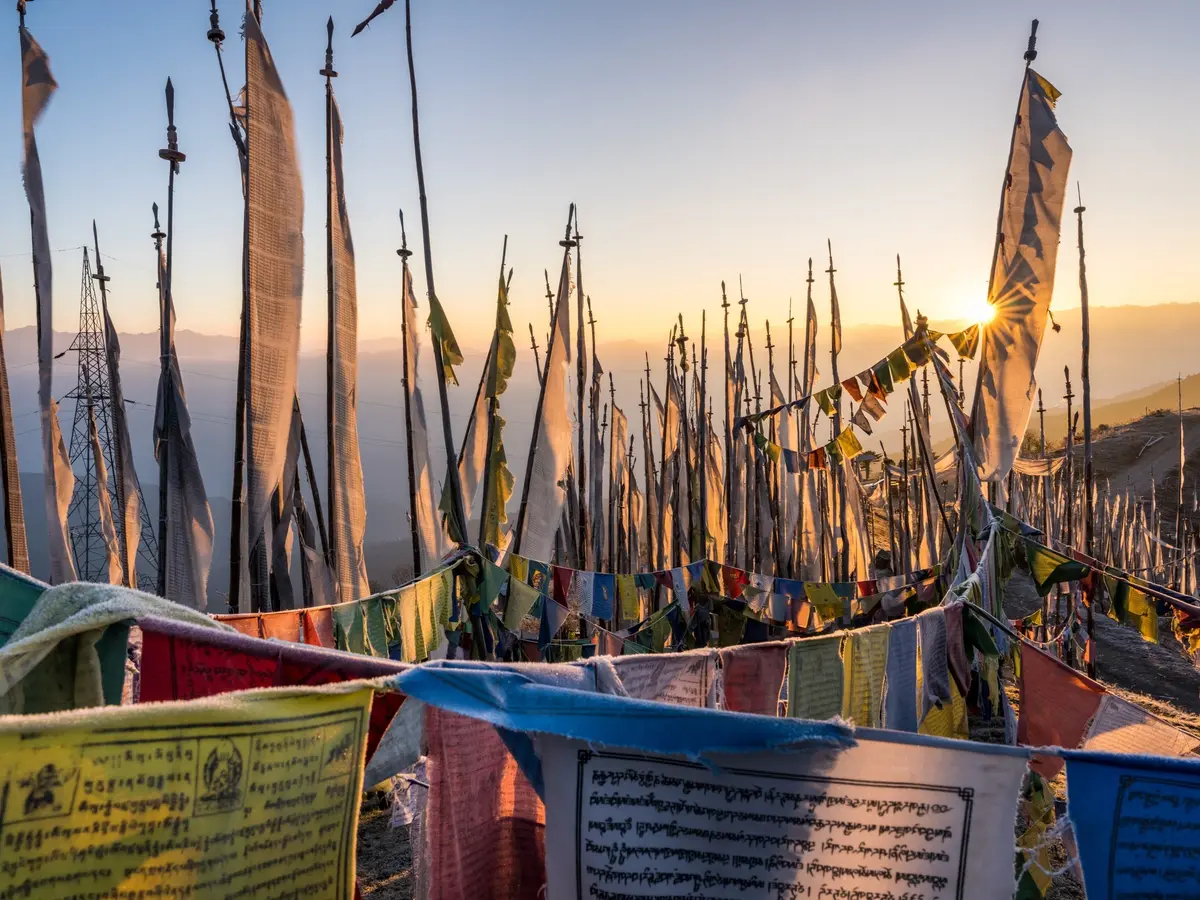
The practical upshot: if your interest is living Vajrayāna Buddhism practised without restriction in its own sovereign state, Bhutan is the only place that describes. If your interest is Hindu culture, Nepal is richer by a wide margin. If your interest is the specific monastic heritage of the Tibetan plateau, Tibet holds sites nowhere else can match.
3. How You Get In
The access rules are where the three diverge most sharply, and where most trip planning succeeds or fails.
Nepal is the easy one. Most nationalities obtain a visa on arrival at Kathmandu airport. You can land without a booking, walk into a trekking agency the next morning, or trek independently on the major routes with the standard permits. Nepal is one of the most accessible countries in Asia for spontaneous travel.
Bhutan requires a visa arranged through a licensed Bhutanese tour operator (that is us, and every other legitimate operator), payment of the Sustainable Development Fee of USD 100 per person per night, and a licensed guide accompanying your itinerary. You cannot simply arrive and improvise. Indian, Bangladeshi, and Maldivian nationals travel under different, cheaper arrangements. Our visa guide covers the process in detail.
Tibet requires two documents: a Chinese visa, and a separate Tibet Travel Permit issued by the Tibet Tourism Bureau. You cannot apply for the permit yourself — it must be obtained through an authorised agency, which requires you to have booked a tour first. A licensed Tibetan guide must accompany you throughout, applications typically need submitting around two weeks or more ahead, and permit policy can change at short notice, including temporary closures to foreign visitors.
A useful reframing: Nepal is open, Bhutan is regulated, Tibet is permitted. Bhutan's controls exist to limit volume and fund the state; Tibet's exist for reasons of state administration and security. The traveller's experience of "you need a guide" is superficially similar and substantively very different.
4. What It Costs
Straightforwardly: Nepal is far cheaper, and there is no honest way to argue otherwise.
In Nepal, budget teahouse trekking runs roughly USD 35–60 per day all-in; mid-range around USD 75–150; premium USD 200–400. Independent budget travellers manage on less.
In Bhutan, the SDF alone is USD 100 per person per night (halved from USD 200 in September 2023, and held at that rate until at least 31 August 2027 — older articles quoting $200 are out of date). On top sits the cost of accommodation, guide, driver, transport, and meals. A realistic all-in figure is USD 250–350 per person per day for a comfortable standard tour, with luxury lodges far above that. Our Bhutan vacation cost breakdown itemises this.
Tibet is typically sold as a package, with cost driven by group size, permit logistics, and mandatory guide and transport.
The question worth asking is not which is cheapest but what the money does. In Bhutan the SDF is a direct government levy funding free healthcare, free education, and conservation — the country's tourism statistics show it raised USD 43.31 million in 2025. You are buying a smaller, better-supported experience and underwriting a development model. In Nepal you are buying flexibility and value, with tourism revenue distributed through a much larger private market. Both are legitimate. They are simply different products, and we would rather you understood that than felt sold to. Our explainer on the SDF is the honest version.
5. Crowds: The Statistic That Explains Everything
Here is the single most clarifying comparison in this article.
In 2025, Nepal received about 1,158,000 international visitors. Bhutan received 209,376 — across the entire country, in a full year.
Now the number that really lands: the Annapurna Conservation Area alone drew a record 246,000 trekkers in 2025. One trekking region in Nepal hosted more people than the whole of Bhutan.
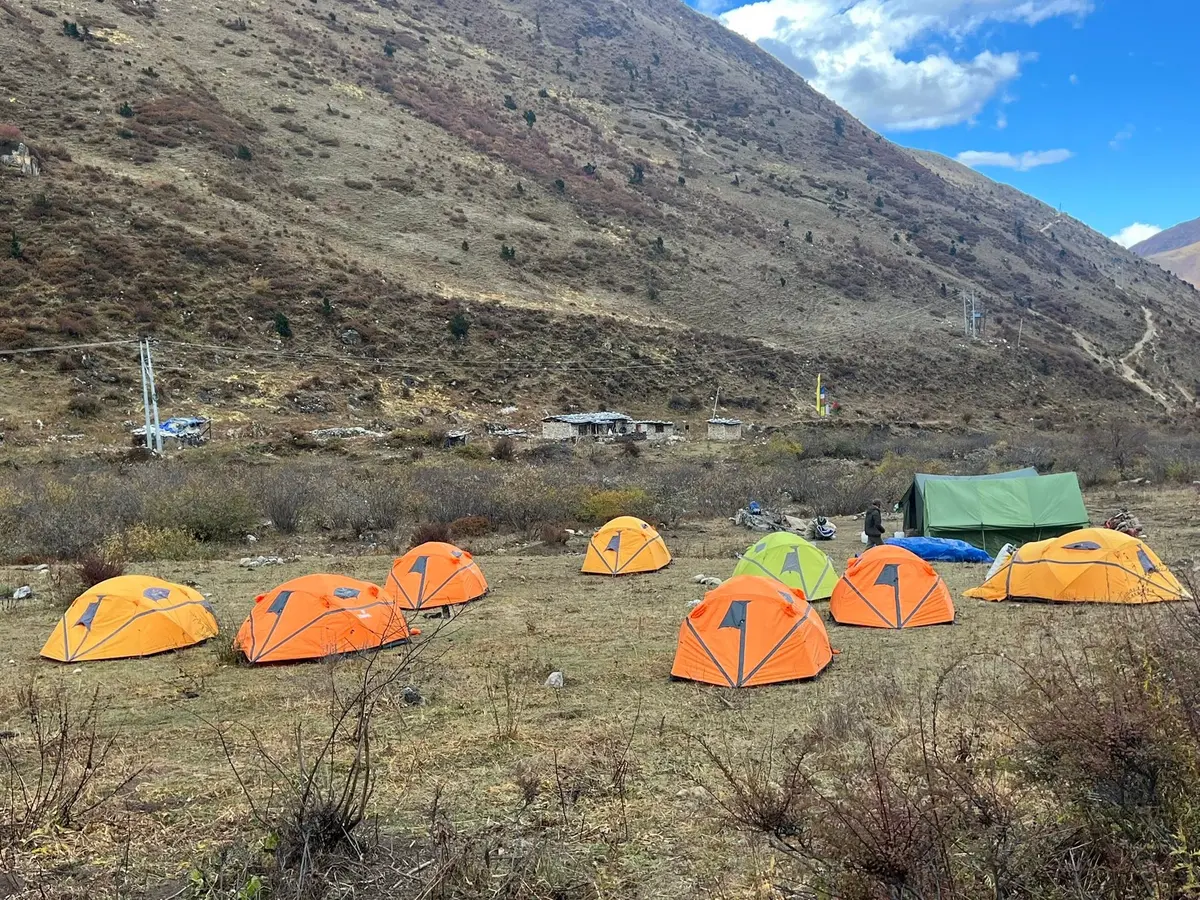
This is not a criticism of Nepal, which has built a genuinely remarkable trekking economy that supports hundreds of thousands of livelihoods. It is a statement about what each place can offer. On the Everest Base Camp or Annapurna circuits you will walk in a stream of other trekkers, sleep in lodges with other trekkers, and queue at viewpoints. On Bhutan's Jomolhari, Druk Path, or Snowman routes, going days without meeting another group is normal.
If solitude is what you are buying, Bhutan delivers it structurally rather than by luck — the visitor cap is the mechanism.
6. Trekking: Camping vs Teahouses vs Restrictions
The style of trekking differs as much as the crowds.
Nepal runs on teahouses. Family lodges line the major routes, so you can walk with a light daypack, sleep indoors, eat cooked meals, and charge a phone. It is comfortable, sociable, extraordinarily good value, and the reason Nepal is the world's most popular trekking destination.
Bhutan runs on camping. Teahouse infrastructure was never developed, so a Bhutanese trek means a full crew — guide, cook, horsemen, pack animals — and tents. That makes it more expensive and more logistically involved. It also means you camp in high valleys with nobody else in them, eat food cooked for your group, and travel with Bhutanese staff whose company is frequently the highlight of the trip. Our complete trekking guide covers the routes in detail.
Tibet's trekking is the most constrained: routes, permits, and guide requirements limit where foreign visitors may walk, and independent trekking is not available in the way it is in Nepal.
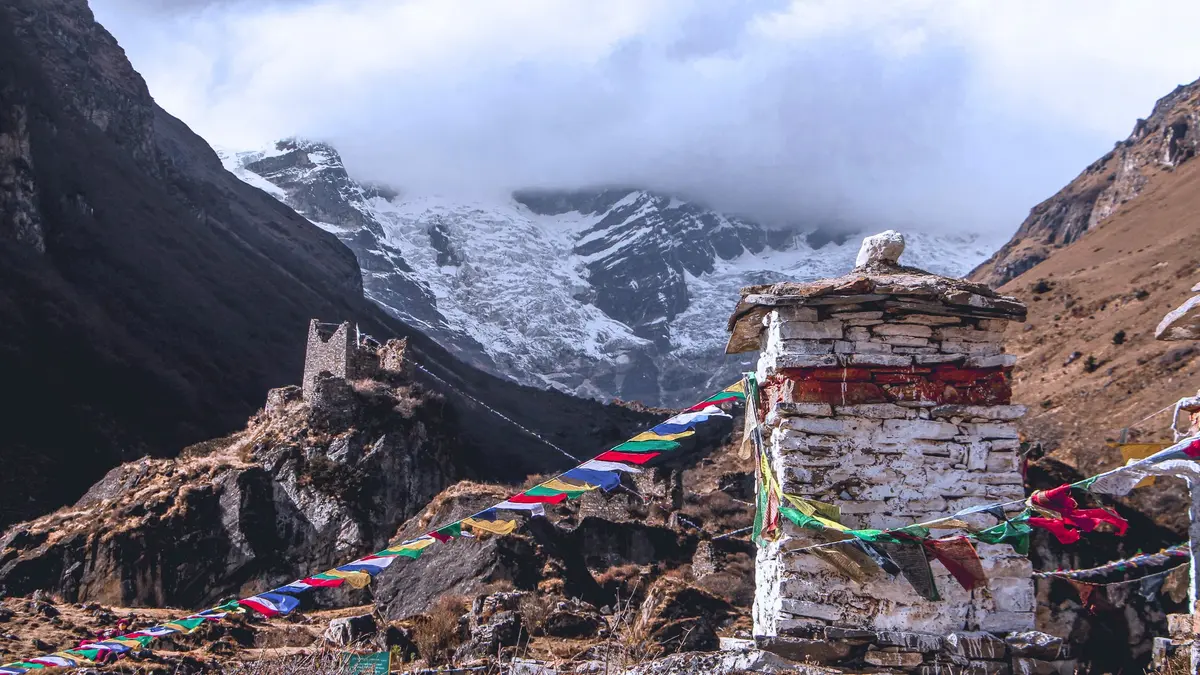
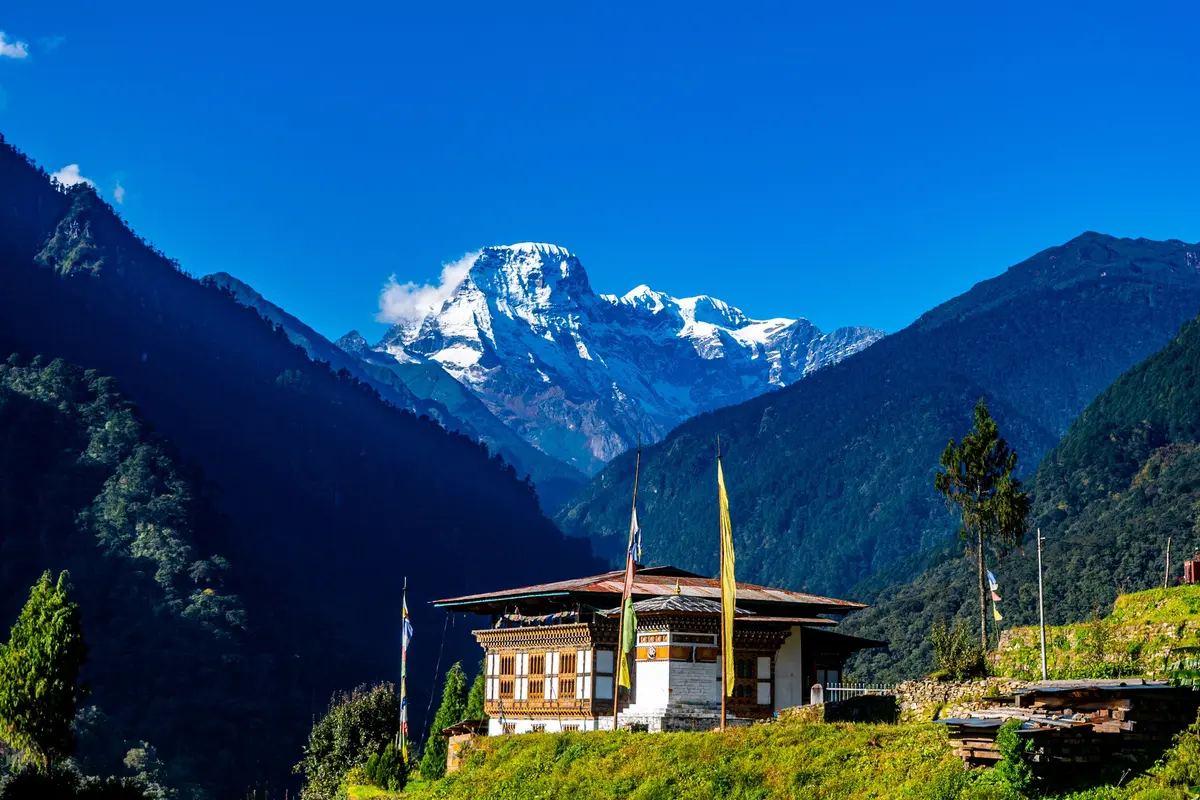
The mountaineering difference is absolute. Nepal is the global capital — eight of the world's fourteen 8,000-metre peaks, Everest's south side, and an entire industry built on summit permits. Tibet permits Everest's north side. Bhutan bans mountaineering altogether: climbing above 6,000 metres was prohibited in 1994 and all mountaineering in 2003, because Bhutanese communities regard the peaks as the homes of protective deities. The result is that Gangkhar Puensum (7,570 m) remains the highest unclimbed mountain on earth and will stay that way.
That single policy tells you more about the difference between these places than any brochure. Nepal sells its summits. Bhutan declined to.
7. Architecture: Dzongs, Pagodas, and Plateau Monasteries
You can tell the three apart from a single photograph once you know what to look for.
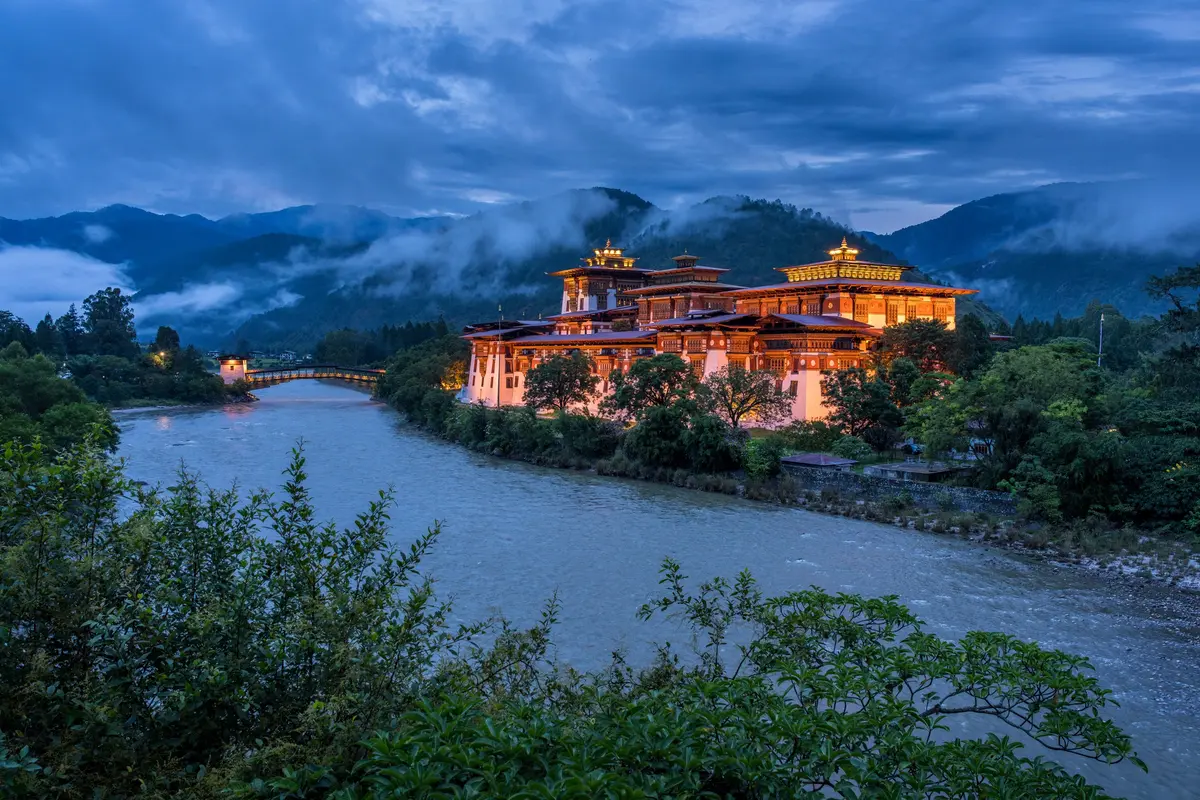
Bhutan builds dzongs — vast fortress-monasteries with inward-sloping whitewashed walls, red-ochre bands, elaborate timber cornices, and no nails. Each dzong houses both the district administration and a monastic community, so they are simultaneously government offices and working monasteries. Punakha Dzong, at the confluence of two rivers, is the most beautiful. Our post on why Bhutanese architecture uses no nails explains the technique.
Nepal's signature is the Kathmandu Valley — tiered pagoda temples, intricately carved wooden windows, brick courtyards, and the great stupas of Boudhanath and Swayambhunath. Newar architecture is among Asia's finest, and its density in Bhaktapur and Patan has no Bhutanese equivalent.
Tibet's monasteries are built for the plateau: massive, flat-roofed, whitewashed structures with dark trapezoidal windows, culminating in the Potala Palace in Lhasa.
8. Living Culture vs Preserved Culture
This is the difference visitors feel most strongly and struggle most to articulate.
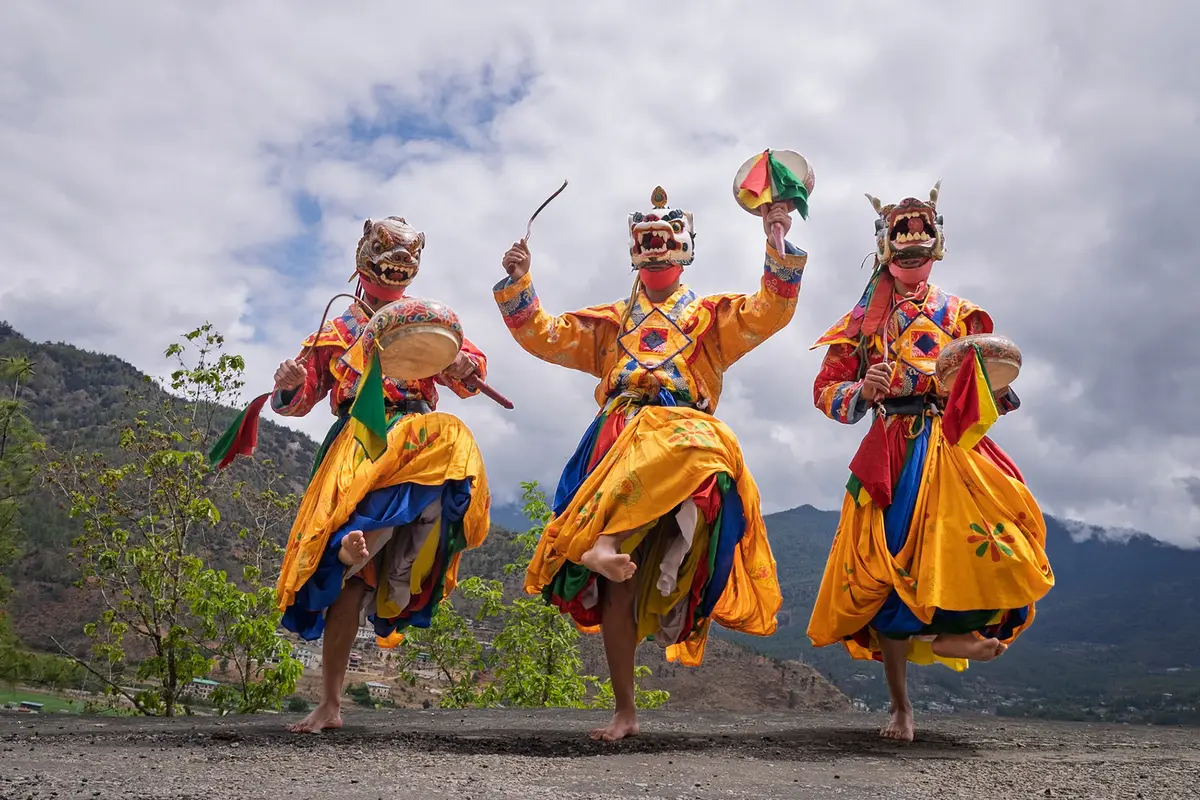
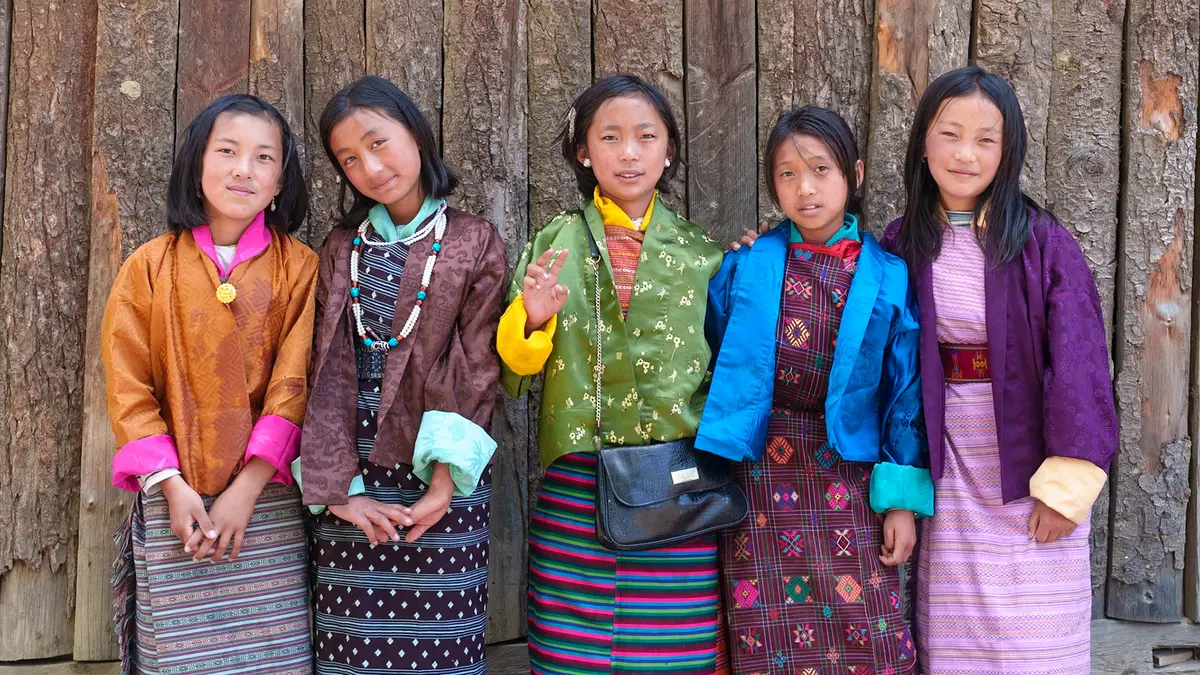
In Bhutan, national dress is everyday clothing. The gho and kira are worn to offices, schools, and government buildings — required in formal settings, and worn without self-consciousness elsewhere. Archery is genuinely the national sport, played competitively in every village. Festivals (tshechus) are religious events attended by local communities, with tourists present as guests rather than as the audience the event exists for.
Nowhere in this is anything staged for visitors. There are no cultural shows put on for tour buses because the culture has not stopped happening.
Nepal's culture is extraordinarily rich and far more diverse — over a hundred ethnic groups and languages, from Terai plains to Sherpa highlands. But in the heavily touristed corridors, a visible commercial layer has grown between visitor and culture: souvenir strips, restaurants calibrated for foreign palates, performances scheduled for tour groups. Step off those corridors and Nepal is as authentic as anywhere on earth; on them, you are being sold to.
In Tibet, cultural and religious life continues under administrative regulation, and many travellers report a palpable tension between the heritage on display and the conditions under which it is maintained.
9. Environment
Bhutan's constitution requires at least 60% forest cover in perpetuity — a binding constraint on every future government, not a target. The country absorbs more carbon than it emits, making it one of very few carbon-negative nations, and more than half its territory sits within protected areas and biological corridors. Wildlife reflects it: tigers and snow leopards in the same national park, and species turning up in places they were thought to have vanished from, like the Himalayan musk deer recently photographed in Tsirang.
Nepal has roughly 45% forest cover and a genuinely admirable community-forestry programme that reversed serious deforestation — but it also carries the environmental load of mass trekking, including waste management problems on the popular routes that Nepali authorities are actively working on.
Tibet's high plateau is ecologically fragile and faces pressures from infrastructure development and climate change, with warming proceeding faster than the global average.
10. So Which Should You Actually Visit?
Here is our honest allocation, including the cases where we are not the answer.
Choose Nepal if: you want to climb or trek to serious altitude at reasonable cost; you are travelling on a budget; you want to move spontaneously without a fixed itinerary; you want teahouse comfort and trail sociability; Everest or Annapurna is the specific dream; or you want the richest Hindu cultural experience in the Himalaya.
Choose Bhutan if: you want living Buddhist culture that has not been reshaped for tourism; you want empty trails and genuine solitude; you value being hosted properly over moving freely; you want your travel spending to fund healthcare, education, and conservation directly; you are interested in a functioning alternative development model; or you want a Himalayan trip where logistics are handled end to end.
Choose Tibet if: the Tibetan plateau and its monastic heritage are your specific interest, and you accept the permit process, guide requirement, and possibility of short-notice policy changes.
Choose Bhutan over Nepal specifically when crowds would ruin it for you, or when you want cultural depth more than mountaineering achievement. Choose Nepal over Bhutan specifically when budget is the binding constraint, or when your goal is a named summit or base camp. Those are real trade-offs and we would rather you make them clear-eyed.
11. Can You Combine Them?
Yes, and many travellers do. Kathmandu and Paro are connected by direct Drukair and Bhutan Airlines flights, making a Nepal + Bhutan itinerary straightforward — trek in Nepal, then decompress into Bhutan's quieter valleys, or reverse it. Two weeks is a comfortable minimum for both.
Adding Tibet is more complex because the permit timeline has to be locked well ahead and is vulnerable to policy changes, but Kathmandu is the traditional overland gateway to Lhasa. If you attempt all three, build in slack.
Our flights page covers the Paro connections, and our guide to travelling to Bhutan from the USA, Singapore, and India explains the routing options.
Frequently Asked Questions
Is Bhutan part of Nepal or Tibet?
No. Bhutan is an independent sovereign kingdom with its own government, currency (the ngultrum), language (Dzongkha), and monarchy. It has never been part of Nepal, which is a separate sovereign republic, nor part of Tibet, which is an autonomous region of China.
What is the main difference between Bhutan and Nepal?
Political and religious: Bhutan is a Vajrayāna Buddhist kingdom, Nepal a Hindu-majority federal republic. Practically: Bhutan regulates tourism through a Sustainable Development Fee and mandatory licensed guides, receiving around 209,000 visitors a year, while Nepal is open to independent travel and received about 1.16 million in 2025.
Is Bhutan more expensive than Nepal?
Yes, substantially. Bhutan's SDF is USD 100 per person per night before any other costs, with realistic all-in daily budgets of USD 250–350. Nepal can be travelled on USD 35–60 a day at the budget end. The Bhutanese premium funds free healthcare, free education, and conservation.
Do I need a guide in Bhutan, Nepal, and Tibet?
In Bhutan, yes — a licensed Bhutanese guide accompanies your itinerary. In Tibet, yes — a licensed guide is mandatory alongside a Tibet Travel Permit. In Nepal you can trek independently on major routes, though guides are recommended and required on some restricted routes.
Which has better trekking, Bhutan or Nepal?
Different, not better. Nepal offers higher peaks, teahouse comfort, lower cost, and eight 8,000-metre mountains. Bhutan offers near-total solitude, full-service camping treks, and pristine trails — but at higher cost and with no mountaineering, which has been banned entirely since 2003.
Can you climb Everest from Bhutan?
No. Everest is on the Nepal–Tibet border, not in Bhutan. Bhutan has no 8,000-metre peaks and prohibits all mountaineering: climbing above 6,000 metres was banned in 1994 and all climbing in 2003, leaving Gangkhar Puensum (7,570 m) the world's highest unclimbed mountain.
Is Tibet a country?
Tibet is the Tibet Autonomous Region of the People's Republic of China. It is not an independent state, and visiting requires both a Chinese visa and a separate Tibet Travel Permit obtained through an authorised agency.
Is Bhutan Buddhist and Nepal Hindu?
Broadly yes. Bhutan's state religion is Vajrayāna Buddhism, with a Hindu minority of roughly a quarter of the population. Nepal is about 81% Hindu and 9% Buddhist, and has been constitutionally secular since 2008.
Can I visit Bhutan and Nepal on the same trip?
Yes. Direct flights link Kathmandu and Paro, and combining the two is common. Allow around two weeks minimum, and arrange Bhutan through a licensed operator in advance, since you cannot enter on an unplanned basis.
Which is safer for tourists?
All three are generally safe for visitors. Bhutan has exceptionally low crime and the reassurance of an accompanying guide throughout. Nepal is safe but requires standard precautions in Kathmandu and awareness of trekking risks, including altitude and weather. Tibet is safe, with the caveat that policy changes can affect travel at short notice.
The Honest Summary
Nepal is the Himalaya at its most accessible, most affordable, and most mountaineering-focused — a genuinely great destination that millions choose for good reasons. Tibet holds monastic heritage of unmatched significance, reached through the most demanding permission process of the three.
Bhutan's distinction is narrower and, for the right traveller, decisive: it is the only one of the three that is both a sovereign country and a living Vajrayāna Buddhist society, and the only one that has deliberately chosen fewer visitors, higher standards, and cultural continuity over volume. That choice is why the trails are empty, why the dzongs are working buildings rather than monuments, and why the fee you pay is higher than anywhere else in the region.
If that trade appeals to you, we would be glad to plan it. If it does not, Nepal is genuinely wonderful and we mean that without reservation.
Sources
- Department of Tourism, Royal Government of Bhutan — 2025 arrivals (209,376) and SDF revenue; see our Bhutan tourism statistics for the full dataset
- Nepal Tourism Board — 2025 international arrivals (1,158,459); Annapurna Conservation Area trekker records (246,000 in 2025)
- Tibet Tourism Bureau permit requirements, 2026
- Constitution of the Kingdom of Bhutan, Article 5 (60% forest cover)
- Bhutanese mountaineering prohibitions of 1994 and 2003
- National census religious demographics for Bhutan and Nepal