Alcohol in Bhutan: Ara, Local Beers, K5 Whisky and What Visitors Should Know
By Sherab Loday · November 1, 2026 · 14 min read
Yes, you can drink in Bhutan, and the local options are better than most visitors expect. Bhutan distils its own whisky, brews a wheat beer in a Swiss-founded brewery in Bumthang, and every farmhouse in the east makes ara, a clear grain spirit that is poured warm with a fried egg in it. This guide covers all of it: the rules, every drink you will actually see on a shelf or a farmhouse table, what each one tastes like, what it costs, and where to try it.
Alcohol is a normal part of Bhutanese life. Beer is the most common drink, and home-brewed ara and singchang come next, according to the 2023 National Health Survey. The country also has a serious public-health conversation about drinking, which we cover at the end, because it explains some of the rules you will run into.
The Rules: Drinking Age, Dry Days and What You Can Bring In
The legal age to buy or be served alcohol in Bhutan is 18. Bars that serve under-18s face a Nu 22,500 fine for a first offence and licence cancellation for repeats, and enforcement has tightened since 2025 after Parliament pushed for it. Carry ID if you look young.
| Rule | What it is now | Notes |
|---|---|---|
| Drinking age | 18 | Applies to buying and being served |
| Tuesday dry day | Lifted on 4 July 2023 | Ran from 1999 to 2023. In December 2025 the Home Minister said the government was discussing bringing it back; as of November 2026 no decision has been reported. Ask your guide |
| Religious dry days | Still observed | Alcohol sales stop on some national religious holidays and inside dzongs, temples and monasteries |
| Bar hours | 1 pm to 10 pm under the Alcohol Service Rules | Hotels serve guests later; many bars stay open past 10 pm in practice |
| Where to buy | Licensed bars, restaurants, hotels and bottle shops | There are more than 9,500 licensed outlets nationally, about one per 75 residents; you will not struggle to find one |
| Duty-free allowance | One bottle of spirits of up to 1 litre | The figure most operators and customs guides quote. Declare anything above it at Paro |
| Drink-driving | Illegal, actively enforced | Nearly 3,000 cases were recorded in 2024; your driver will not drink, and you should not drive at all as a visitor |
| Public drinking | Frowned on and can be fined | Keep it to bars, restaurants, hotels and farmhouses |
Two practical points. First, alcohol has been taxed at Nu 1,200 per litre of pure alcohol under the Excise Tax Act 2025, plus 5% GST from 1 January 2026, so imported spirits are expensive and local brands are the better deal. Second, every bar is supposed to display an alcohol notice and refuse service to anyone visibly drunk, and the better ones do.
Ara: Bhutan's Home-Distilled Spirit
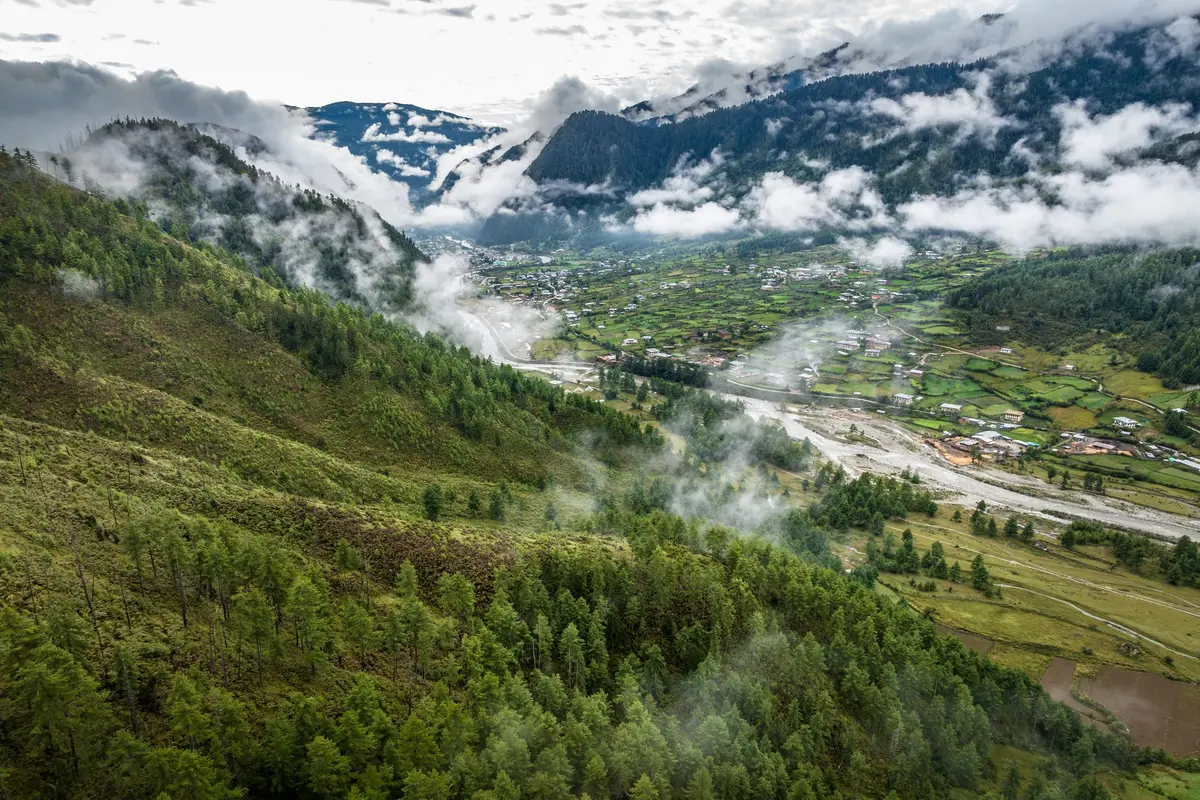
Ara (also spelt arag) is the drink Bhutan is known for. It is a clear or milky grain spirit distilled at home, served warm, and it is the one drink you will be offered in a farmhouse whether you ask for it or not. It tastes like a rough, warm sake with a grainy finish, and it is strong: the village test for a good batch is whether it catches fire.
What It Is Made From
The grain depends on where you are. Eastern Bhutan uses maize, with millet, rice and wheat behind it. Central valleys such as Bumthang use wheat and barley, sometimes buckwheat. The west uses wheat, rice and barley. Some households now distil apples and potatoes too.
How It Is Made
The grain is boiled in a big cauldron, spread on a bamboo mat to cool, and dusted with a home-made yeast cake (phab). It goes into a wooden or bamboo tub under blankets, near the kitchen stove, and ferments for two to four weeks. The fermented mash, called lum, is then loaded into an arazang, a tall copper or earthen still with a small pot suspended inside it and a bowl of cold water (khataw) sealed on top. A fire underneath drives the vapour up, it condenses on the cold bowl and drips into the pot. One run takes two to three hours. The water on top is swapped two or three times as it warms.
How It Is Served
- Neat and warm, in a small cup, usually before dinner
- With a fried or poached egg and butter: the host melts butter in a pan, cracks an egg in, pours the ara over, and sometimes sets it alight before ladling it out
- With scrambled egg and rice stirred through, which is closer to a soup
- Tinted pink with red sandalwood powder, or flavoured with fried garlic or dried meat, in the east
Before the first sip, Bhutanese dip a fingertip and flick a few drops to the floor or into the air as an offering to local spirits. Do the same and your host will approve. Your guide will show you.
Legal Status
Ara is legal to make and drink at home but illegal to sell. In practice it is poured for guests in farmhouses and homestays across the country, and some restaurants serve it quietly. Eastern districts such as Lhuentse and Trashigang have the strongest ara culture, and the custom of tshogchang, where village women arrive with a wooden ara flask (palang) and plates of eggs, chillies and rice to welcome a guest, started there and is now used even for official receptions.
Where to Try It
The reliable way is a farmhouse dinner or a homestay, which most Bhutan itineraries include, often in Punakha, Paro or Bumthang. On the Lotus-Born Trail and any eastern Bhutan itinerary you will meet it daily. Ask for a small cup: refusing outright is awkward, but after the third pour it is fine to say meshu meshu (no more) and cover the cup with your hand.
Bangchang, Singchang and Tongba: The Fermented Village Drinks
Before ara is distilled, the fermented mash makes a drink of its own. These are low-strength, cloudy, slightly sour grain beers that farming families drink through the day, and they are the second most common drink in the country after bottled beer.
| Drink | What it is | Strength | Where |
|---|---|---|---|
| Bangchang | Fermented rice, wheat or maize mash mixed with water and strained; milky, sweet-sour, drunk fresh | Low, like a light beer | Western and central Bhutan, farmhouses |
| Singchang (shingchang) | Fermented grain steeped in water and drained off; clearer and a little stronger than bangchang; often served cold | Low to moderate | Eastern Bhutan, where it stands in for ara at welcomes |
| Tongba | Fermented millet in a bamboo or wooden mug, topped up with hot water and sipped through a straw that filters the grain | Mild, and it keeps refilling | Southern Bhutan and the east, from the Nepali and Limbu tradition |
Two ceremonial forms are worth knowing because you will see them on a trip. Marchang is a welcome offering in which a vessel of ara or bangchang, topped with butter, is presented to a guest or a lama at the start of a ceremony, often with a wooden ladle and a song; it is performed at official events and at the start of festivals. Serkem ("golden drink") is a few drops of alcohol offered to the deities before a meal or a ritual.
You will find bangchang and singchang at farmhouse meals, at tshechus in the east, and at archery matches, where tshogchang is offered to the archers. They are not bottled and not sold in shops.
Bhutanese Beer: Druk 11000, Red Panda and the Craft Breweries
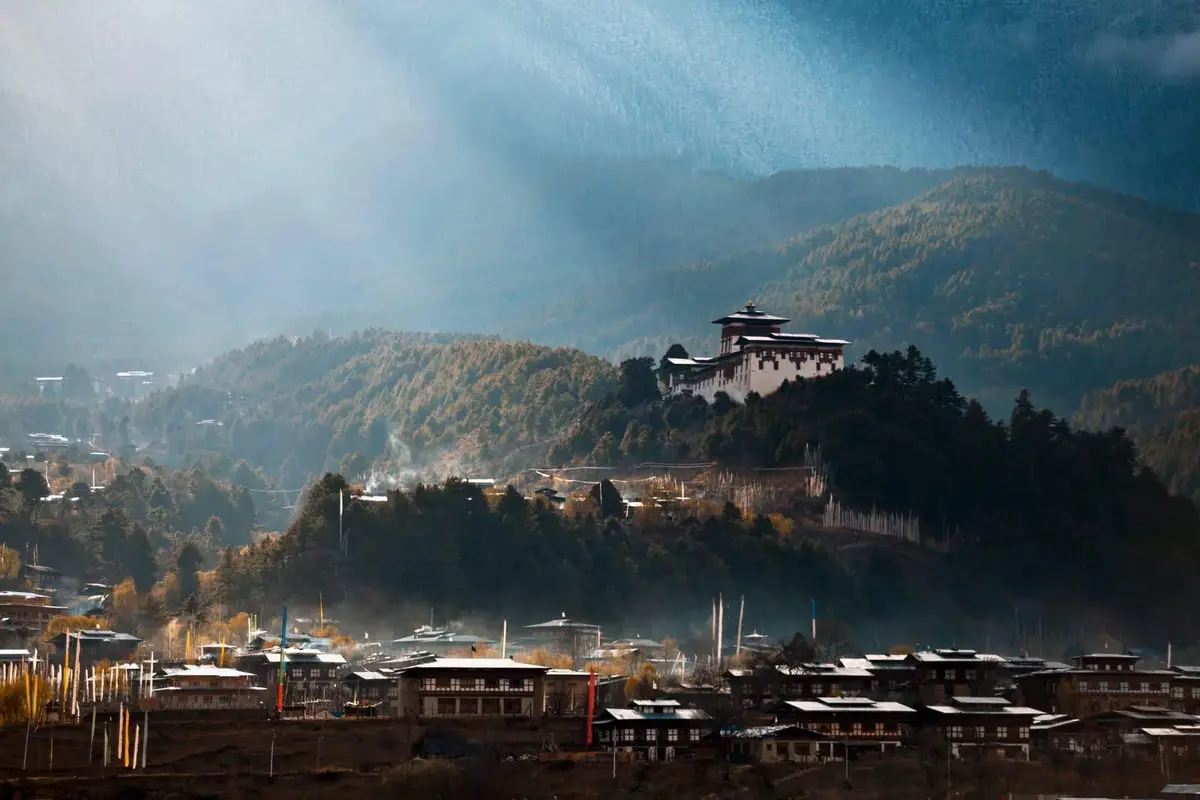
Beer is the most common drink in Bhutan, and the country makes more of its own than most visitors expect. There are two industrial breweries in the Pasakha estate near Phuentsholing, a Swiss-founded brewery in Bumthang that has been running since the 1960s, and craft breweries in Paro and Thimphu. Every one of them is worth a bottle.
| Beer | Brewery and town | Style | What to expect |
|---|---|---|---|
| Druk 11000 | Bhutan Brewery, Pasakha | Strong lager, 8% | The national beer. Pale, clean, strong; 500 ml and 650 ml bottles. The one you will see most |
| Druk Lager (Druk Premium) | Bhutan Brewery, Pasakha | Lager | Pale gold, rice-like aroma, the lighter session beer |
| Druk Supreme | Bhutan Brewery, Pasakha | Strong lager | Clear gold with a sweet-corn note |
| Chabchhu, Dragon Frost, Thunder 15000 | Kinjore Brewery, Pasakha | Strong lagers, 8% | Budget strong beers, mostly sold in the south and in bars |
| Red Panda Weissbier | Bumthang Brewery, Jakar | Unfiltered hefeweizen | Hazy, banana and clove, no preservatives; only about 1,400 bottles a week, so it does not travel far |
| Red Rice Lager | Namgay Artisanal Brewery, Paro | Lager brewed with red rice | Amber, nutty, slightly sweet; the flagship of Bhutan's best-known craft brewery |
| Dark Ale, Wheat, IPA, Milk Stout, Apple Cider | Namgay Artisanal Brewery, Paro | Craft range | Dark Ale and Wheat are bottled nationally; IPA, stout and cider are on tap at the brewery |
| Bhutan Glory Amber Ale | Ser Bhum Brewery | Amber ale, 5% | Malty, caramel, mild bitterness; sold in cans and on tap in Thimphu bars |
| Dragon Stout | Ser Bhum Brewery | Stout | Roasty, coffee aroma, a little sweet |
Druk 11000 is the beer of Bhutan. It is brewed by Bhutan Brewery in the Pasakha industrial estate below Phuentsholing, with Himalayan spring water according to the label, and it is strong at 8%. Locals drink it with momos and at archery. One 650 ml bottle is a full evening for most visitors.
Red Panda is the beer with the story. Fritz Maurer, a Swiss who came to Bhutan in the 1960s and later became an honorary citizen, set up a cheese factory and a small brewery in Bumthang. Red Panda is an unfiltered wheat beer with natural yeast and no preservatives, which is why it is cloudy and why it is hard to find outside central Bhutan. The brewery and the Swiss cheese factory next door are a standard stop on any Bumthang itinerary, and the Gouda and Emmental are the right thing to eat with it.
Namgay Artisanal Brewery in Paro is the craft brewery most visitors see. Dorji Gyeltshen, who trained in hotel management in Switzerland, built it on his family's land and opened a brewpub with a restaurant. Red Rice Lager is made with Paro's own red rice and is the beer to order with a Bhutanese meal. The brewery sits a few minutes from Paro town and takes walk-ins for a tasting flight.
Ser Bhum Brewery, run by CEO Sonam Lhaden, calls itself Bhutan's first craft brewery and brews the Bhutan Glory Amber Ale and Dragon Stout you will find in cans in Thimphu. It also contract-brews for Indian craft labels.
Price guide. Expect roughly Nu 100 to 150 for a bottle of Druk 11000 in a shop and Nu 150 to 250 in a bar; craft beers run about Nu 120 to 200 for a 330 ml bottle and more on tap in hotel bars.
Bhutanese Whisky: K5, Special Courier and the Army Welfare Project
Bhutan's whiskies come from one unusual producer. The Army Welfare Project (AWP), set up in 1978 with distilleries in Gelephu and Samtse, blends and bottles spirits whose profits pay for pensions, loans and scholarships for soldiers and their families. Buying a bottle of K5 at the airport is, in a small way, funding a Royal Bhutan Army pension.
The whiskies are blends: imported Scotch malt, neutral grain spirit and Himalayan spring water, bottled at 42.8% (Bhutan's standard strength, written on old labels as "25 degrees under proof"). They are smooth and easy rather than complex, and they are priced for locals, which is why visitors find them such good value.
| Whisky | Launched | What it is | Price guide |
|---|---|---|---|
| K5 | 2008, for the Fifth King's coronation | The premium blend: vatted Scotch malt and grain spirit, blended and bottled by hand in Gelephu. Pale, mellow, light smoke. The bottle to take home | About Nu 950 at Paro duty free; a little more in town |
| Special Courier (SC) | 1983 | The everyday whisky of Bhutan, slightly peaty, blended over four years. Used in cocktails at COMO Uma Paro. Often sold out | About Nu 300 |
| Bhutan Highland | — | A popular smooth local blend; some hotels pour it as their house whisky | Budget |
| Silver Jubilee | 1997, for the Fourth King's silver jubilee | Vintage Scotch malt and neutral grain alcohol, 42.8% | Mid-range |
| Bhutan Grain Whisky | — | A plain grain whisky at 42.8% | Budget |
| TER ("treasure") | 2019 | 18-year single malt, bottled in Bhutan; ripe fruit, vanilla, a little sherry. Limited | Premium, rare |
| 1907 | Limited edition of 12,500 | 12-year single malt in a presentation box; out of production and resold at several times its price | Collector |
| Black Mountain, Coronation, Rockbee brandy, Dragon rum, Bhutan XXX rum | Various | Older AWP labels and brandies you will see on bottle-shop shelves; the rums go back to the 1980s and once supplied the Indian Army | Budget |
K5 is the one to try. It was first made in 2008 for the coronation and took its name from the Fifth King (K5 is how Bhutanese refer to him). It drinks well neat with ema datshi, which COMO's bartenders recommend, and it carries the kind of label story that makes it the usual souvenir bottle.
Where to taste. Bottle shops in Thimphu and Paro stock all of these. For a guided flight, COMO Uma Paro runs a Bhutanese whisky and cocktail session, and most hotel bars in Paro and Thimphu pour K5 by the peg.
Wine, Peach Wine, Rum and the Rest
Bhutan now makes real wine from grapes grown at up to 2,800 metres, and it has made sweet fruit wine for decades. Both are worth a glass, for different reasons.
Bhutan Wine Company. Founded in 2018 by Mike Juergens and Ann Cross, the company planted its first vines in 2019 at sites from about 150 m to 2,800 m (500 to 9,150 ft), including Yusipang above Thimphu. Sixteen varieties are in the ground; Cabernet Sauvignon, Tempranillo, Sauvignon Blanc and Riesling lead. The first vintage was 2023. A commemorative blend called Ser Kem First Barrel, named after the ritual offering of alcohol to the gods, went to a Bonhams online auction in April 2025, where a 7.57-litre bottle called The Himalayan (one of two, the other given to the King) sold for US$18,750. The first commercial release, the 2024 vintage, followed in May 2025.
What you can drink now: a 2025 Sauvignon Blanc (US$150), a 2025 Pinot Noir rosé (US$80), the 2024 Tempranillo (US$300), and the Karp (white) and Marp (red) reserve blends at US$200 to 350. A 2025 Merlot and Marp Reserve II are in barrel for release in late 2026 or spring 2027. The tasting room and wine bar is on Yarden Lam in Chubachhu, central Thimphu, open afternoons and evenings (check hours before you go). This is expensive wine, but it is the only place in the world to drink Bhutanese grape wine at the source.
Zumzin peach wine. The fruit wine every hotel bar in Thimphu keeps chilled. Made from peaches grown in Bhutan's highlands, it is pale, lightly green, peachy and sweeter than a Sauvignon Blanc, and it is the usual answer when a bartender is asked for something local that is not beer. Takin Red Wine is the sweet grape-based sibling on the same shelves; Vintria Shiraz is a locally bottled dry red.
Rum and brandy. The Army Welfare Project has bottled XXX Bhutan Rum since the 1980s, when it was sold to Indian Army canteens, and still makes a Deluxe Rum matured in imported oak. Rockbee brandy and the 2020 VSOP, a blend of French VSOP and XO cognac finished in Limousin oak and bottled in Gelephu, sit above it.
Imported drinks. Indian beers, Scotch and Indian whiskies are everywhere; wine from India, Chile and Australia is on hotel lists at a steep markup because of the per-litre excise. Order local.
Where to Drink in Bhutan
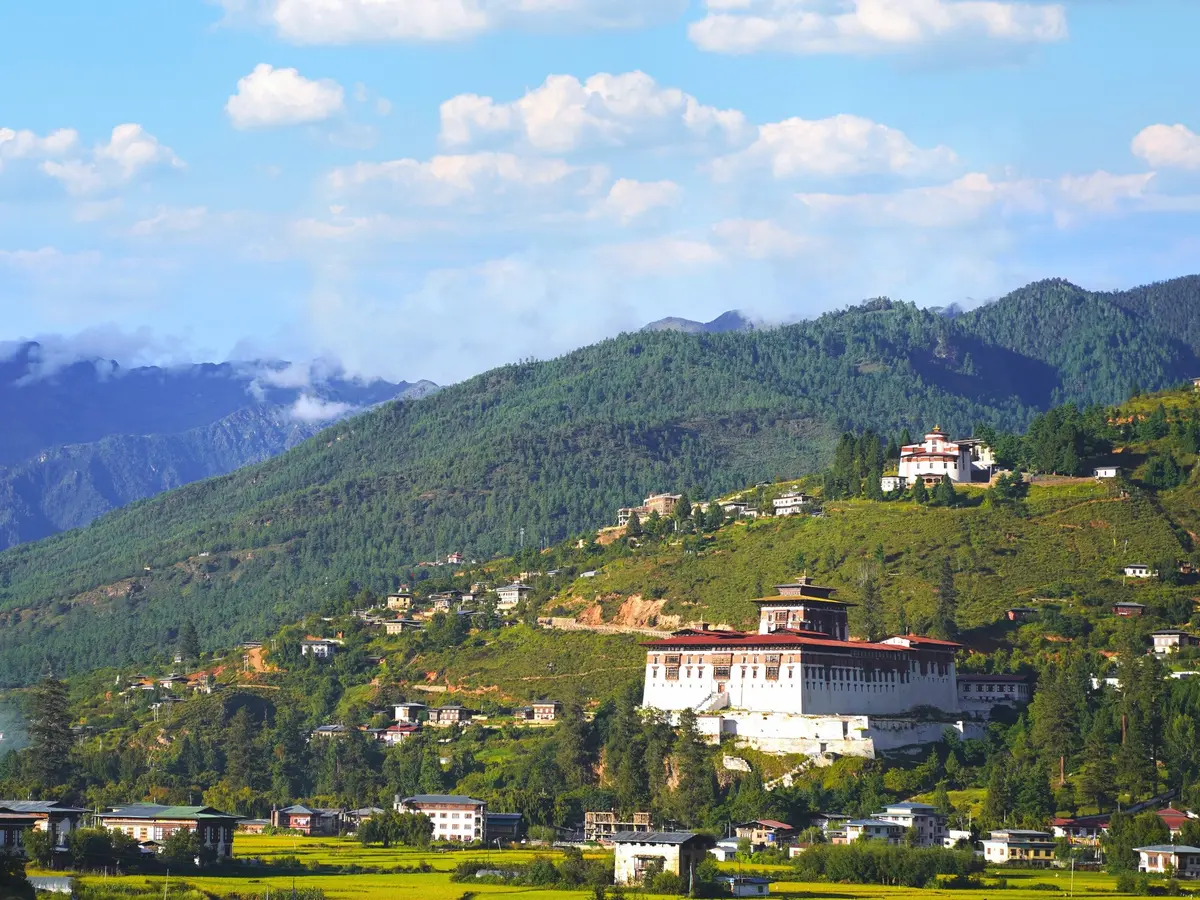
The short answer: farmhouses for ara, Bumthang and Paro for brewery visits, Thimphu for bars and the wine room. Here is how that fits a normal itinerary.
| Stop | What you drink | How to arrange it |
|---|---|---|
| Farmhouse dinner or homestay (Paro, Punakha, Bumthang, Haa, the east) | Ara, bangchang or singchang with suja and a home-cooked meal | On most Best of Bhutan itineraries; ask us to include one if yours does not |
| Bumthang Brewery and Swiss cheese factory, Jakar | Red Panda on site, with Gouda and Emmental; apple products from the same farm | Standard stop on the Bumthang day; small shop, no booking needed |
| Namgay Artisanal Brewery, Paro | Tasting flight of red rice lager, wheat, dark ale, IPA, stout and cider; pub food | A few minutes from Paro town; walk-ins fine, check hours |
| Bhutan Wine Company tasting room, Chubachhu, Thimphu | Bhutanese grape wine by the glass and bottle | Afternoons and evenings; book for a guided tasting |
| COMO Uma Paro bar | Guided Bhutanese whisky flight and K5 cocktails | Hotel guests and walk-ins; ask us to book |
| Thimphu bars (Norzin Lam, Chang Lam and the Clock Tower area) | Druk 11000, Ser Bhum cans, K5, Zumzin; live music on weekends | Bars run 1 pm to 10 pm officially, later in practice; Mojo Park is the long-running live-music bar |
| Archery grounds, anywhere | Whatever the archers are drinking, usually Druk 11000 or singchang | Walk up on a weekend and you will be handed a cup |
| Paro airport duty free | K5 and Special Courier at the lowest prices in the country | On departure; K5 about Nu 950 |
What it costs. A bottle of Druk 11000 in a bar is roughly Nu 150 to 250; a craft beer Nu 200 to 350; a peg of K5 Nu 150 to 300; a glass of Bhutan Wine Company wine from about US$20. Ara in a farmhouse is free with dinner, and a tip of Nu 200 to 500 to the family is the right gesture.
Buying bottles. Every town has licensed bottle shops. Thimphu's are concentrated around Norzin Lam and Chang Lam, and the supermarkets stock beer and local spirits. Most shops close by 9 or 10 pm.
Drinking Etiquette, and a Straight Word on Alcohol in Bhutan
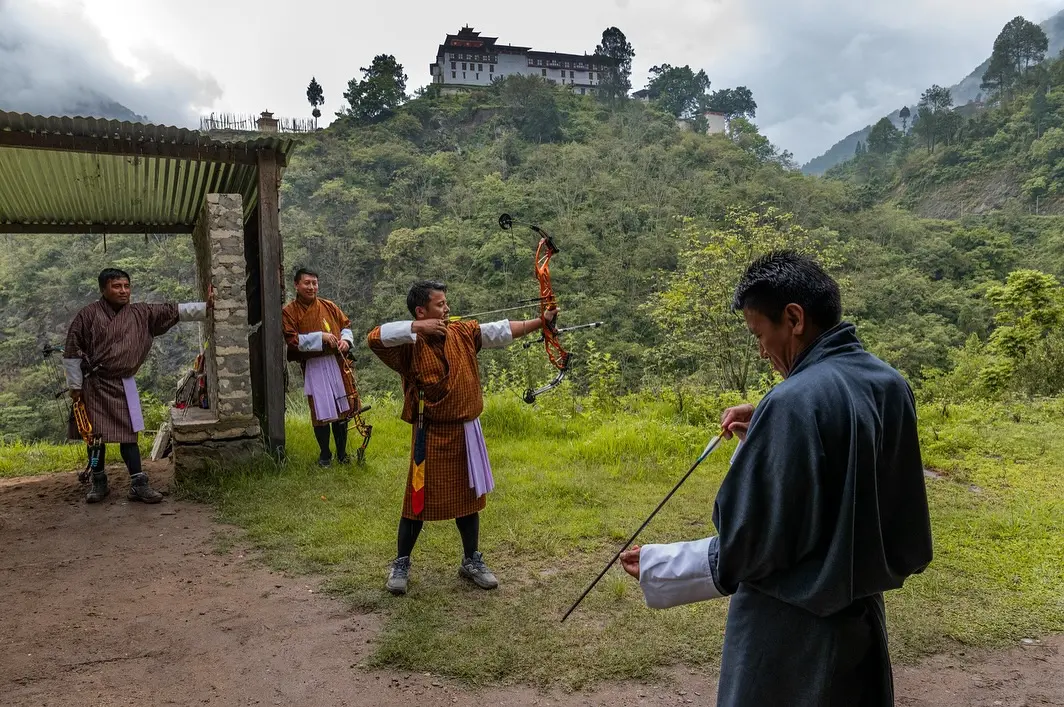
A few habits will make you a better guest:
- Accept the first cup. Refusing a welcome drink outright is awkward; take a small amount, then say meshu meshu (no more, please) and cover the cup with your hand when you have had enough. Hosts will press three times; that is politeness, not pressure
- Flick a few drops before the first sip as an offering. Your host does it, and you can too
- Use both hands, or the right hand with the left touching the elbow, to receive a cup from an elder or a host
- No alcohol inside dzongs, temples, monasteries or at religious ceremonies unless it is part of the ritual (marchang, serkem), and then it is offered, not drunk
- No drinking in the street, and do not drink around monks or children
- Your guide and driver will not drink on duty. Do not offer
- Doma (betel nut with lime and leaf) is what most Bhutanese chew alongside a drink. Try it once; it stains
The public-health side. Bhutan has one of the highest rates of alcohol-related liver disease in the region, and the government is open about it. The 2023 National Health Survey found 40% of adults had drunk in the past year and 40% of those drank heavily on occasion; home brewing was reported in 31% of households. Parliament has debated a National Alcohol Policy since 2024, the excise was raised in 2025, under-18 sales enforcement tightened, and the Tuesday dry day may return. None of this affects a visitor who drinks in bars and farmhouses, but it explains why the rules exist and why you should not treat a farmhouse ara session as a drinking contest. Drink with the family, not past them.
Frequently Asked Questions
Is alcohol allowed in Bhutan?
Yes. Alcohol is legal, widely sold and part of daily life. Bhutan makes its own beer, whisky, wine and a home-distilled spirit called ara. The country banned tobacco sales, not alcohol, and the two are often confused.
What is the legal drinking age in Bhutan?
- Bars and shops cannot sell to anyone younger, and enforcement has tightened since 2025.
Is Tuesday still a dry day in Bhutan?
No. The Tuesday dry day ran from 1999 until 4 July 2023, when the government lifted it. In December 2025 the Home Minister said bringing it back was under discussion, so check with your guide. Some religious holidays are still dry.
What is Bhutan's national drink?
Ara, a clear grain spirit distilled at home from rice, maize, wheat, barley or millet and served warm, often with a fried egg and butter. Bhutan has not declared an official national drink; ara is the one Bhutanese name.
What is the most popular beer in Bhutan?
Druk 11000, an 8% strong lager brewed by Bhutan Brewery in Pasakha near Phuentsholing. Red Panda, an unfiltered wheat beer from Bumthang, is the one visitors remember.
What is K5 whisky?
Bhutan's premium blended whisky, launched in 2008 for the Fifth King's coronation and named after him. It is made from imported Scotch malt, neutral grain spirit and Himalayan spring water, blended and bottled by the Army Welfare Project in Gelephu. Around Nu 950 at Paro duty free.
Does Bhutan make wine?
Yes. Bhutan Wine Company planted vines in 2019 and released its first commercial vintage (2024) in 2025, with a tasting room in Thimphu. Zumzin peach wine is the older, sweeter fruit wine found in every hotel bar.
How much alcohol can I bring into Bhutan?
One bottle of spirits of up to 1 litre is the duty-free allowance most operators and customs guides quote. Declare anything above it at Paro. Tobacco for personal use is allowed in small quantities but taxed at 100%, and selling it is banned.
Can tourists drink ara?
Yes, in farmhouses, homestays and at festivals, where it is poured for guests. It is illegal to sell, so you will not find it in shops, but most itineraries include a farmhouse meal where it appears.
Is it rude to refuse a drink in Bhutan?
Refusing the first offer outright is awkward. Accept a small cup, then decline further pours with meshu meshu and a hand over the cup. Non-drinkers can ask for suja (butter tea) instead and nobody minds.
Can I drink in public in Bhutan?
No. Drinking in streets, parks and near religious sites is frowned on and can be fined. Bars, restaurants, hotels and homes are fine.
How much does a beer cost in Bhutan?
About Nu 100 to 150 in a shop and Nu 150 to 250 in a bar for Druk 11000; craft beers Nu 200 to 350 in bars. Roughly US$1.50 to 4.
Sources
- BBS: No more dry-day Tuesdays (4 July 2023)
- The Bhutanese: Discussion underway to bring back Tuesday as a dry day (13 December 2025)
- BBS: Committee urges a National Alcohol Policy (June 2025)
- BBS: 90% of bar owners breach Alcohol Service Rules (2014)
- Daily Bhutan: All you need to know about alcohol consumption in Bhutan
- Daily Bhutan: 6 popular beverages to enjoy in Bhutan
- Daily Bhutan: Bhutan enters the wine world (May 2025)
- Bhutan Wine Company: Our wine
- Mandala Collections, University of Virginia: Ara making
- Mandala Collections, University of Virginia: Tshogchang
- Roads & Kingdoms: Ara in Bhutan (2018)
- Druk Asia: Whiskies of Bhutan
- COMO Hotels: The spirit of ritual in Bhutan
- BookMyTour: 7 beers to try in Bhutan
- 88 Bamboo: Red Panda Weiss beer review
- Daily Bhutan: Namgay Artisanal Brewery and its red rice lager
- The Brewer Magazine: Ser Bhum Brewery
- Druk Asia: Bhutan customs and duty-free allowances
Want a farmhouse ara evening, a Bumthang brewery stop or a Thimphu wine tasting built into your trip? Tell us when you plan your Bhutan tour and we will put it on the itinerary. For what to eat alongside all this, read our guide to Bhutanese cuisine.