Trans Bhutan Trail in Monggar: The Latongla–Zhongar Birding Trail
By Best of Bhutan Research Desk · October 5, 2026 · 8 min read
The Trans Bhutan Trail in Monggar got a new round of attention this week. On Friday, 2 October 2026, 48 Scout leaders — all of them teachers — walked the stretch from Latongla down to the ruins of Zhongar Dzong, according to BBS. The aim was to revive interest in the old path and to promote it to Bhutanese and international hikers. Locally the section is known as the Monggar birding trail, because a 2023 survey recorded 301 bird species along it.
In short: the Latongla–Zhongar section of the Trans Bhutan Trail in Monggar, eastern Bhutan, is a birding trail of about 24 km that drops more than 2,000 metres from Latongla (2,721 m) to the ruins of Zhongar Dzong. A 2023 survey recorded 301 bird species along it. Visitors can hike it in one long day with a licensed guide.
This post sets out what the route involves, what was built along it, which birds have been recorded, and how a visitor can walk it today.
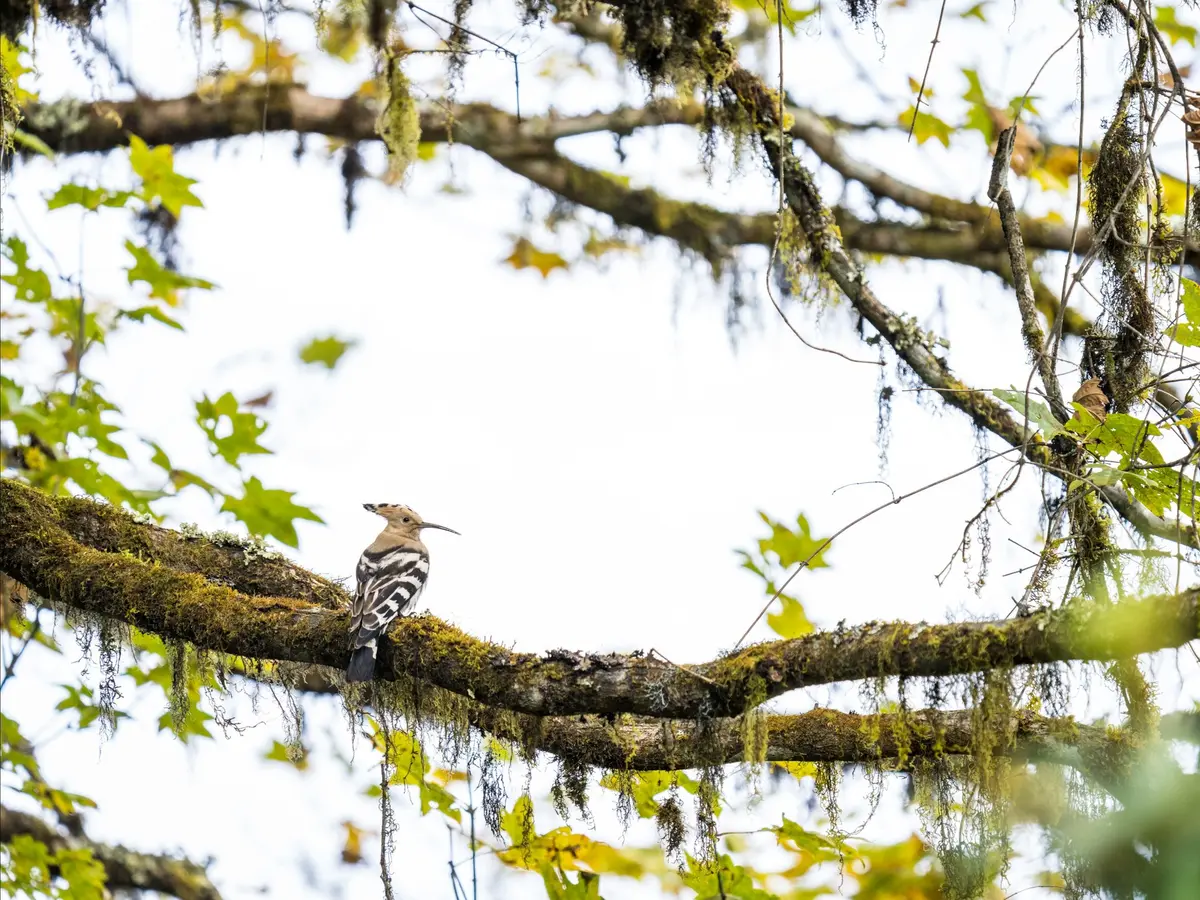
A Eurasian hoopoe in Bhutanese forest. Representative image only — not taken on the Latongla–Zhongar trail.
Key Facts at a Glance
| Detail | What is reported |
|---|---|
| Route | Latongla to the ruins of Zhongar Dzong at Menchugang, Monggar district |
| Part of | Trans Bhutan Trail (Haa to Trashigang, 403 km) |
| Length of birding stretch | About 24 km (BBS, 2024) |
| Starting elevation | Latongla, 2,721 m |
| Elevation change | More than 2,000 m of descent |
| Walking time | Over seven hours (Scout walk, October 2026) |
| Bird species recorded | 301 (Bhutan Birdlife Society survey, 2023) |
| Development funding | About Nu 10 million from the Global Environment Facility (BBS, 2024) |
| Gewog | Saling |
| Latest news | 48 Scout leaders walked the route on 2 October 2026 (BBS) |
What Happened This Week
The walk was coordinated by Monggar Central School with support from the district administration, BBS reported on 3 October. Participants started at Latongla, at 2,721 metres, and finished at the ruins of Zhongar Dzong at Menchugang. The descent is more than 2,000 metres and the group took over seven hours.
The end point has its own history. Zhongar Dzong was built in the 17th century above the valley between Lingmethang and Thidangbi, and was badly damaged by fire in the late 18th century; only ruins remain.
The route was not chosen at random. BBS notes that this path was historically used to carry tax rations from Zhongar to Jakar in Bumthang. Organisers said they hope to hold similar walks with students and to use the trail to promote ecotourism in the area, for both Bhutanese and foreign visitors.
It is a small event, but it is a useful signal: the district and local schools are actively promoting this stretch, and it is one of the few sections of the Trans Bhutan Trail with a documented bird list and purpose-built birding facilities.
The Monggar Birding Trail: How It Was Built
The birding trail predates this week's walk. In January 2024, BBS reported that a birding trail of about 24 km was being developed from Latongla to Zhongar Dzong in Saling Gewog. At that point the work was more than 70 percent complete. Around Nu 10 million had been invested, funded through the Global Environment Facility, and two community contractors had started work in November 2023.
The planned facilities listed in that report were:
- Bird hides and bird-watching towers
- Canopies and observation desks
- Bridges and toilets
- Camping and resting sites
The project was expected to benefit about 90 households in three villages, plus about 40 shopkeepers in Lingmithang. Contractors told BBS at the time that hauling stone and materials 8–9 km through forest was a major difficulty.
Status note: we have not been able to confirm from an official source how many of these facilities are finished and in use as of October 2026. If you are planning a birding-focused trip, ask your operator to confirm what is currently open.
301 Bird Species: What the Survey Found
The bird list comes from a survey by the Bhutan Birdlife Society, published by the Monggar Dzongkhag administration. Three of the society's birders surveyed the Latongla–Zhongar stretch between 30 May and 7 June 2023 and recorded 301 species. The report describes habitats ranging from about 400 to 4,000 metres in the surrounding landscape, and credits that range for the high count. It calls the area "an attractive destination for birding enthusiasts."
Globally threatened and near-threatened species named in the report include:
| Species | Status given in the survey |
|---|---|
| Chestnut-breasted partridge | Vulnerable |
| Rufous-necked hornbill | Vulnerable |
| Great hornbill | Vulnerable |
| Beautiful nuthatch | Vulnerable |
| Ward's trogon | Near threatened |
| Tawny fish owl | Near threatened |
| Mountain hawk-eagle | Near threatened |
Several of these — Ward's trogon, beautiful nuthatch and rufous-necked hornbill in particular — are on many birders' target lists for the Eastern Himalaya, and they are hard to find in most other countries in the region.
Keep in mind that the survey was a single early-summer effort over about a week. Species presence varies by season, and seeing any of the rarer birds requires time and a skilled local guide.
Why It Matters
Most visitors to Bhutan stay in the west: Paro, Thimphu, Punakha and sometimes Bumthang. Eastern districts such as Monggar see far fewer tourists. A marked, surveyed section of trail with a clear focus — birds — gives travellers and tour operators a concrete reason to go further east.
It also matters for the communities along the route. The trail was designed to put income into nearby villages and the shops at Lingmithang, rather than only into hotels in town. Walks like this week's are part of an effort to make sure the route is used and maintained.
What It Means for Travellers
Where it sits on the Trans Bhutan Trail
The Trans Bhutan Trail runs 403 km from Haa in the west to Trashigang in the east. On the official end-to-end itinerary, which takes 36 days, hikers cross Thrumshingla on day 27, camp at Latongla on day 28 and walk down to the Zhongar Dzong ruins and the Lingmithang campsite on day 29. In other words, Latongla–Zhongar is one long trekking day in the eastern part of the trail.
You do not need to walk the full trail to hike this section. It can be added as a single day to an itinerary that drives between Bumthang and Monggar over Thrumshingla.
How hard is it?
The main challenge is the descent. Dropping more than 2,000 metres in one day is hard on knees and ankles, even though the route is mostly downhill. The Scout group took over seven hours. Expect a full day, carry water and snacks, and use trekking poles. Birders who stop often should plan for longer, or split the stretch with a night at a camping site.
Rules and permits
The usual rules for visiting Bhutan apply:
- You need a Bhutan tourist visa. See our Bhutan visa guide.
- The Sustainable Development Fee applies to each night you stay. See our SDF explainer.
- The Trans Bhutan Trail itinerary requires a licensed guide each day.
When to go
The 2023 bird survey took place in late May and early June. For walking conditions, the drier months of autumn and spring are generally easier than the monsoon. Our month-by-month guide to Bhutan's seasons covers weather in more detail. If birds are your priority, discuss timing with a birding guide, as the species mix changes through the year.
Plan Your Visit
- Trans Bhutan Trail overview — sections, history and how the full route fits together
- Bhutan treks — other multi-day routes, from the Druk Path to Merak–Sakteng
- Complete trekking guide to Bhutan — fitness, gear, seasons and costs
- Monggar district — what else to see in the area, including Mongar Dzong
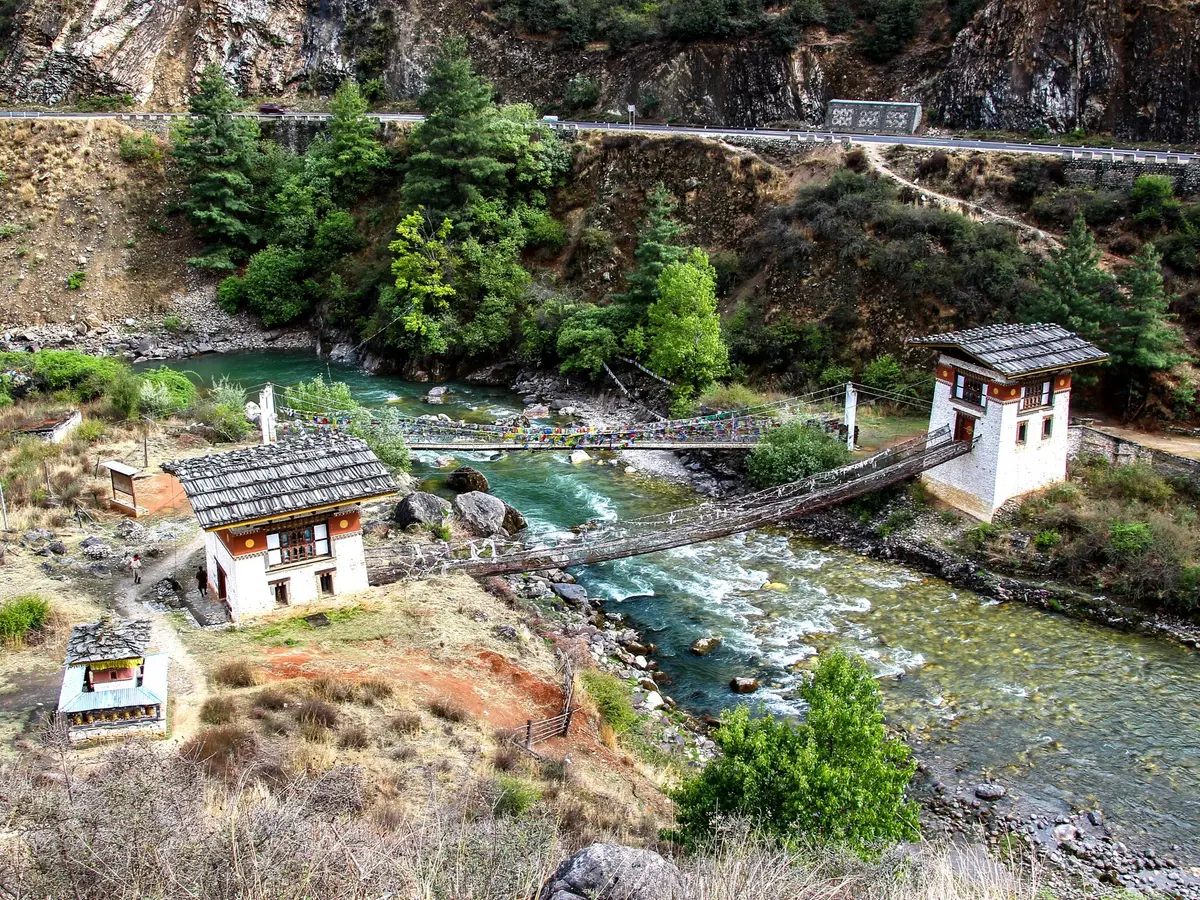
A traditional suspension bridge and gatehouses in western Bhutan. Old footpaths like the Trans Bhutan Trail cross many bridges of this kind; this one is shown for illustration and is not on the Monggar section.
Frequently Asked Questions
Where is the Latongla to Zhongar Dzong trail?
It is in Monggar (Mongar) district in eastern Bhutan, in Saling Gewog. The trail starts at Latongla, at 2,721 metres, and descends to the ruins of Zhongar Dzong at Menchugang, near Lingmithang. It is part of the Trans Bhutan Trail.
How long is the Monggar birding trail?
The birding trail was reported by BBS in 2024 as about 24 km long. A group of Scout leaders who walked it in October 2026 took over seven hours, with more than 2,000 metres of descent.
How many bird species are on the Trans Bhutan Trail in Monggar?
A 2023 survey by the Bhutan Birdlife Society recorded 301 bird species on the Latongla–Zhongar stretch, including threatened species such as the rufous-necked hornbill, beautiful nuthatch and Ward's trogon.
Can tourists hike the Trans Bhutan Trail in Monggar?
Yes. International visitors can hike it as part of a guided trip, either as a single day or as part of a longer Trans Bhutan Trail itinerary. A visa, the Sustainable Development Fee and a licensed guide are required.
Do I have to walk the whole Trans Bhutan Trail?
No. The full trail is 403 km and takes about 36 days on the official itinerary, but most visitors walk one or more sections. The Latongla–Zhongar section fits easily into an eastern Bhutan road trip.
Sources
- BBS, "The long way down: Scout leaders walk Monggar's old route, and invite the world," 3 October 2026 — bbs.bt/247007
- BBS, "Birding trail being developed along Trans Bhutan Trail," 18 January 2024 — bbs.bt/197776
- Bhutan Birdlife Society, Bird Diversity Along the Trans-Bhutan Trail (TBT), 2023, published by Monggar Dzongkhag — mongar.gov.bt (PDF)
- Wikipedia, "Zhongar Dzong" — en.wikipedia.org
- Trans Bhutan Trail, End-to-End Trek itinerary — transbhutantrail.com
Want to add the Monggar birding trail to an eastern Bhutan itinerary? Talk to us — we can arrange a birding guide and plan the day around the descent.