Bhutan Accommodation Rules: Tourists Must Use Certified Stays
By Best of Bhutan Research Desk · October 24, 2026 · 8 min read
Bhutan's accommodation rules for tourists are simple on paper: you may only stay in places the Department of Tourism (DoT) has approved and certified. On 22 October 2026 the DoT posted a notice on its announcements page titled "Only approved and certified accommodation providers to cater to tourists." It reminds hotel owners, village homestays and anyone planning to open one that, in the notice's words, "prior clearance, technical approval, and official certification from the Department are mandatory" before they serve tourists.
The notice repeats a reminder the DoT first issued in late August, which Bhutan Times reported on 31 August. Coming in the busiest month of the autumn season, it is a signal that inspections are continuing. Arrivals in September 2026 were more than 26,000, up over 28% on September 2025, BBS reported, and more visitors means more pressure on rooms.
This post explains what the rules say, what they mean for travellers, and how to make sure the hotel, farmhouse or campsite on your itinerary is legal.
In short: stay only in DoT-certified hotels, certified village homestays or designated campsites. Informal rentals, private apartments and camping in open areas are not allowed for tourists. If a tour operator books your trip, ask them to confirm each property is certified. If you book your own rooms, check before you pay.
Key Facts at a Glance
| Detail | What the rules and reports say |
|---|---|
| Latest notice | DoT, 22 October 2026 (repeats an August 2026 reminder) |
| Legal basis | Tourism Rules and Regulations (TRR) 2024 |
| Who must be certified | Hotels, village homestays, tourist night halts, outdoor stays and campsites |
| Where tourists can sleep | DoT-certified accommodation, or an alternative the DoT approves |
| Not allowed | Uncertified premises, private property, unauthorised open areas |
| Fine for operating without certification | Nu 50,000 per service (TRR 2024) |
| Fine for not using certified accommodation | Nu 10,000 per person per night (TRR 2024) |
| Fine for camping outside designated sites | Nu 10,000 per person per night (TRR 2024) |
| Late renewal fee | Nu 50 per day |
| Certificate validity | 3 years, displayed on the premises |
| Certified establishments | 552, including 199 village homestays (end of September 2026) |
What the DoT Notice Says
The 22 October notice is short. It is addressed to "existing and prospective" accommodation providers, names village homestays specifically, and says certification is needed before a property starts operating or serving tourists. It points to the TRR as the rule behind it.
The August version, as summarised by Bhutan Times, adds more detail:
- Providers need prior clearance and technical approval from the relevant authorities, then certification from the DoT, and may not start hosting tourists until both steps are done.
- Camping and other overnight stays must happen only at DoT-approved, certified establishments or designated sites.
- Overnight stays at non-certified premises, private properties or unauthorised open areas are prohibited.
- Certified establishments must keep a valid star rating certificate (or other approval), stay compliant and apply for renewal before the certificate expires.
- The DoT and other authorities will keep monitoring and inspecting.
Neither the notice nor the Bhutan Times report gives a new effective date. These are existing rules from 2024 being restated.
What the Tourism Rules and Regulations 2024 Say
The TRR 2024 is the document that sets out the requirements and the fines. The parts that matter for travellers:
- Certified accommodation. Tourist accommodation is provided by DoT-certified establishments (clause 16). Where certified accommodation is not adequate, the DoT may approve an alternative under set conditions (clause 19). The penalty schedule lists Nu 10,000 per person per night for not using certified accommodation or an approved alternative.
- Camping. Trekking groups must camp at campsites the DoT has identified and notified (clause 52). Camping in a non-designated area also carries Nu 10,000 per person per night.
- Operating without a licence. Anyone providing a tourism service needs a valid licence, registration or certification (clause 57). The penalty is Nu 50,000 per service.
- Star ratings. Hotels are classified from 1 to 5 stars by the DoT. The first assessment is free.
- Validity. A certificate is valid for three years (clause 155) and must be displayed (clause 157). Renewal is due within three months before expiry, with a late fee of Nu 50 per day after that.
The TRR does not set out a rule for tourists staying with Bhutanese friends or relatives. If that is your plan, ask the DoT or your tour operator before you travel rather than assuming it is allowed.
Village Homestays: What Counts as Certified
Village homestays are one of the most popular ways to see rural Bhutan, and the notice names them directly. The rules for them are tighter than many travellers expect.
Under the TRR (clauses 140–145) and the DoT's Village Homestay Guidelines 2026, issued in January 2026:
- The host must be a Bhutanese citizen who lives in the house.
- The house must be in a rural area, outside municipal boundaries. The 2026 guidelines also say it must have been built on or before March 2017.
- A homestay can have at most three guest rooms, with no more than two guests per room. Guests may not sleep in the altar room or living room.
- The family runs it. Hiring outside staff, leasing the house to someone else, or subletting is not allowed.
- Overnight guests get meals, home-cooked where possible.
- Any fees for activities such as cooking, farm work or weaving must be clearly displayed.
- The certificate is valid for three years and must be displayed inside the house.
So a "homestay" in a town apartment, or a guesthouse with ten rooms run by staff, is not a certified village homestay. As of the end of September 2026, the DoT had certified 552 accommodation establishments, including 199 village homestays, according to BBS.
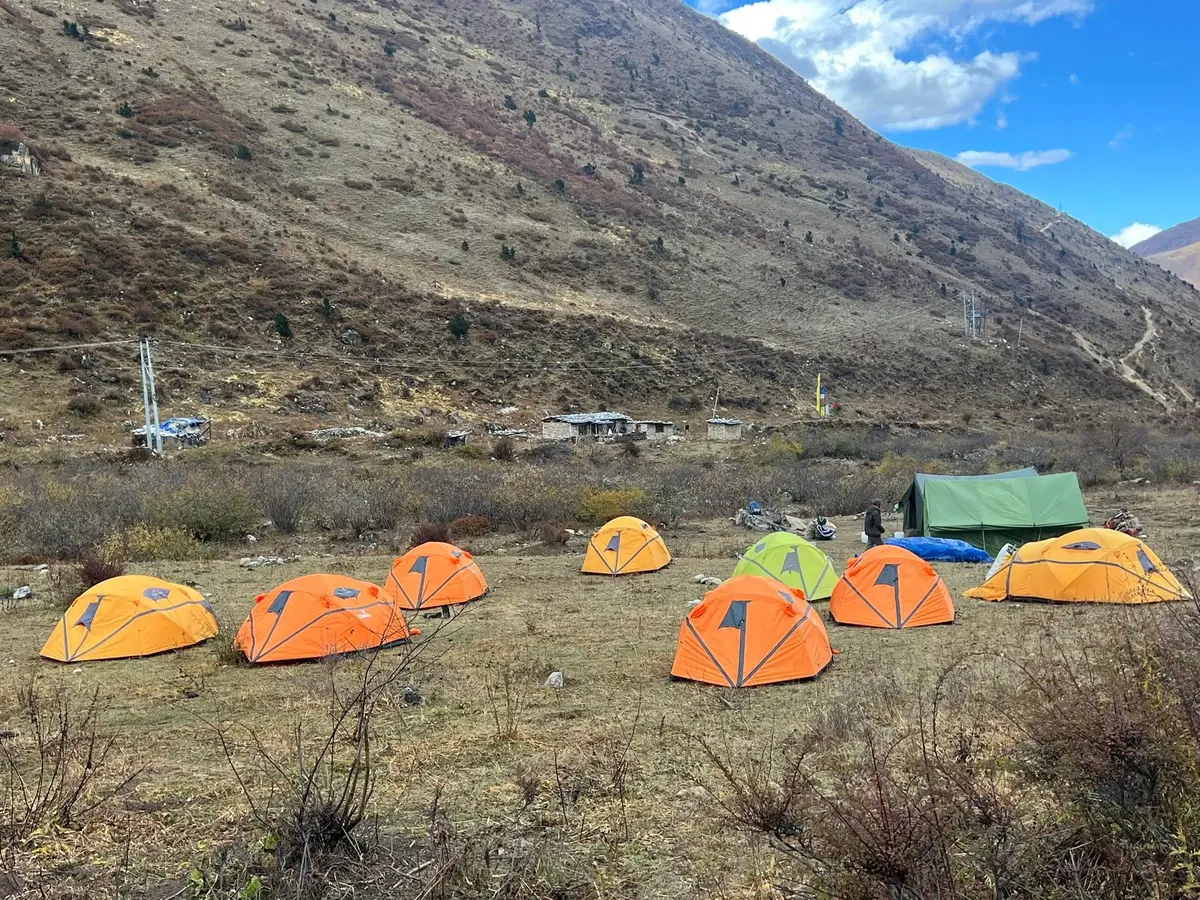
Trekking groups must camp at campsites the DoT has identified. Pitching a tent in an open field is not allowed for tourists.
Airbnb and Private Rentals
Bhutan has never allowed tourists to stay in uncertified private rentals, and listings on platforms such as Airbnb fall into that group unless the property is certified.
The issue first came up in 2019, when the hotel association complained about bungalows and apartments in Thimphu and Paro being rented to tourists. The Tourism Council of Bhutan (now the DoT) said it would issue a public notice against such businesses and begin inspections, The Bhutanese reported. Its director general at the time told the paper that "any business that is being operated without a license is illegal." Certified guest houses and homestays in remote areas without hotels were still allowed.
The 2024 rules and the 2026 notices keep that position. A listing that looks like a homestay online is only legal for tourists if the DoT has certified it.
What It Means for Travellers
If a licensed tour operator books your trip (required for most international visitors), the operator chooses certified hotels and campsites as part of your package. It is still worth asking for the hotel names in advance and checking that each one is certified, especially if you asked for a specific homestay or farmhouse.
If you are an Indian, Bangladeshi or Maldivian visitor booking your own rooms, this matters more. Cheap rooms offered informally near the border or found on general booking sites may not be certified. Border towns such as Phuentsholing are already under strain this month (see our post on the October guide shortage). The TRR fine for not using certified accommodation is set per person, per night, so confirm before you pay.
If you are trekking, your outfitter must use designated campsites. Our Bhutan trekking guide covers how treks and camps are organised.
If you want a farm or village stay, ask for a certified village homestay by name and expect a small family house with up to three guest rooms, not a guesthouse. Several days in rural Bhutan can also lower costs compared with hotel nights. See our Bhutan vacation cost guide.
The rules do not change the Sustainable Development Fee. The SDF is charged per night regardless of where you sleep.
How to Check a Property Is Certified
- Ask your tour operator for written confirmation that each hotel, homestay and campsite is DoT-certified.
- Check the DoT's hotel list. The DoT publishes a list of certified hotels with dzongkhag and star category. The list is undated, so a recently certified hotel may be missing. Use it as a first check, not a final answer.
- Look for the certificate. Certified establishments must display it. Homestays must display it inside the house.
- Be wary of private apartments and unrated "guesthouses", especially in Thimphu, Paro and border towns.
To see properties we already work with, browse our Bhutan hotels pages or our best luxury hotels in Bhutan.
FAQ
Can tourists use Airbnb in Bhutan?
Only if the property is certified by the Department of Tourism. Uncertified private apartments and houses are not allowed to host tourists, and the DoT has said this since at least 2019.
Are homestays legal for tourists in Bhutan?
Yes, if they are certified village homestays. They must be in rural areas, run by a Bhutanese family that lives in the house, and have no more than three guest rooms. Bhutan had 199 certified village homestays at the end of September 2026.
Can I camp anywhere in Bhutan?
No. Tourists may only camp at designated campsites identified by the DoT. The TRR 2024 fine for camping elsewhere is Nu 10,000 per person per night.
What is the fine for staying in uncertified accommodation in Bhutan?
The TRR 2024 lists Nu 10,000 per person per night for not using certified accommodation or a DoT-approved alternative. Providers operating without certification face Nu 50,000 per service.
Do Indian tourists have to stay in certified hotels in Bhutan?
The notice and the TRR do not set out a separate accommodation rule for Indian visitors. If you book your own rooms, confirm each property is DoT-certified before you pay.
Sources
- Department of Tourism, Bhutan: "Only approved and certified accommodation providers to cater to tourists," announcements page, 22 October 2026.
- Bhutan Times: "DoT tightens rules on tourist accommodation," 31 August 2026. The August reminder, banned overnight stays and penalty clauses.
- Tourism Rules and Regulations 2024: Department of Tourism. Certified accommodation, camping, homestay clauses and penalty schedules.
- Village Homestay Guidelines 2026: Department of Tourism, January 2026. Room limits, host requirements and certification.
- BBS: "Tourist arrivals up more than 28 per cent in September," 14 October 2026. Arrivals and the count of certified establishments and homestays.
- The Bhutanese: "Airbnb and accommodating tourists in private apartments is illegal: TCB," 20 April 2019.
- DoT certified hotels list: Department of Tourism, undated.
Fines and requirements are as stated in the TRR 2024 and may be revised. If you have a newer DoT notice, please get in touch.
Planning a trip with homestay nights or a trek? Talk to us and we will book certified hotels, homestays and campsites for your whole itinerary.